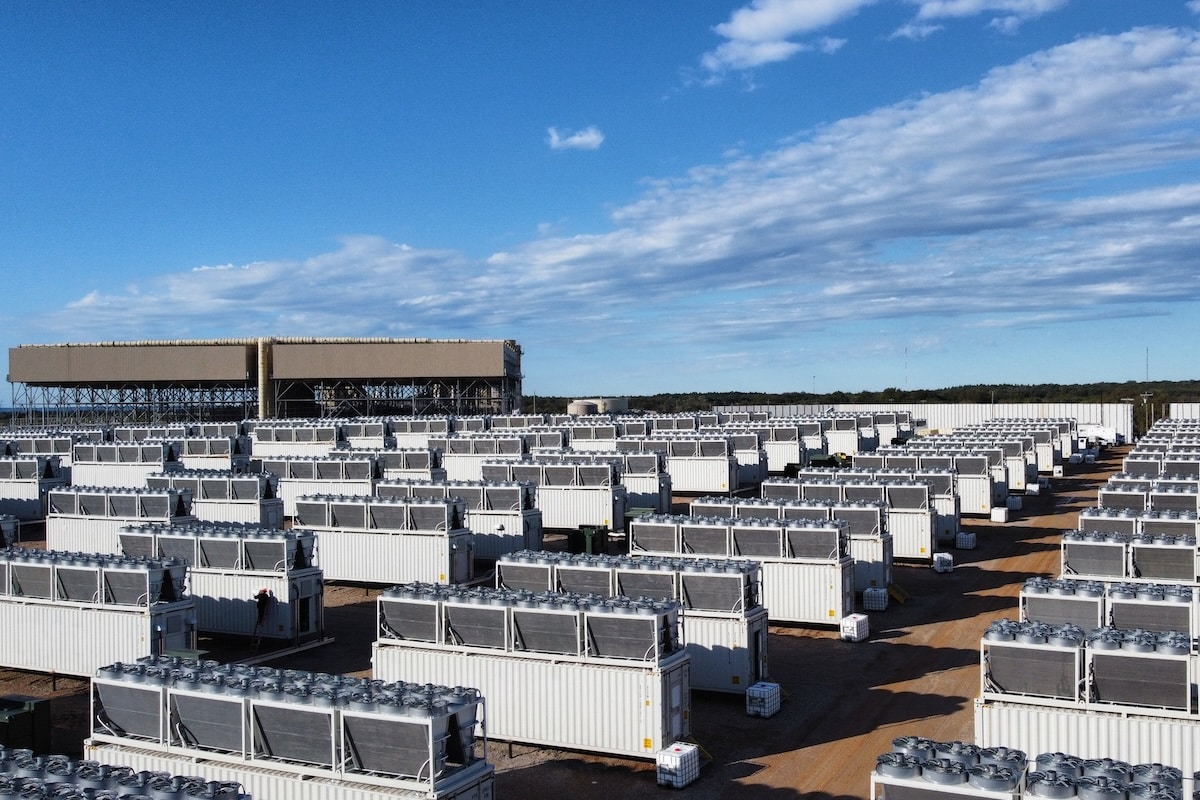
ERCOT Bitcoin Mines Required to Report Power Demand to Texas State

Large-scale Bitcoin mining companies operating within the Electric Reliability Council of Texas (ERCOT) region must now register with the state and submit annual operational details under a new rule adopted by Texas regulators.
The Public Utility Commission of Texas (PUCT) announced on Nov. 21 a requirement for virtual currency mining facilities in the ERCOT territory with a total load exceeding 75 megawatts (MW) and an interruptible load of at least 10% of the facility’s actual or anticipated annual peak demand to register.

“Specifically, the rule requires a registrant to provide information to the commission annually about its virtual currency mining facility’s location, owners, form of business, and demand for electricity,” the PUCT explained in a filing released Thursday.
“To ensure the ERCOT grid is reliable and meets the electricity needs of all Texans, the PUCT and ERCOT need to know the location and power needs of virtual currency miners,” said PUCT Chairman Thomas Gleeson in an official statement.
The rule follows a public comment period in September, during which industry stakeholders such as Marathon Digital Holdings (MARA), Satoshi Energy, and the Texas Blockchain Council provided input.
The PUCT seeks information on a registrant’s legal business name, corporate information, and regulatory contact, as well as details on each mining facility, such as:
- the name, address, and county of operation of each facility;
- the identity of the property owner and lessor or facility host;
- the size of the facility in square feet and a description of the infrastructure, including whether it is fixed or movable, open or enclosed;
- the names of the transmission and distribution service providers serving the facility and the load zone the facility is located in;
- the Electric Service Identifier (ESIID) or equivalent unique premise identifier assigned to the facility;
- the anticipated peak load, in MWs, from the facility for each year of the five-year period beginning on the date of the registration;
- the percentage of the site load that meets the definition of interruptible load
- the actual peak load in MWs and total power consumption in MWhs for the prior calendar year, if the facility took retail electric service at any time during the prior calendar year.