Auradine Rebrands as Velaura AI, Shifts Teraflux Inventory to In-House Bitcoin Mining

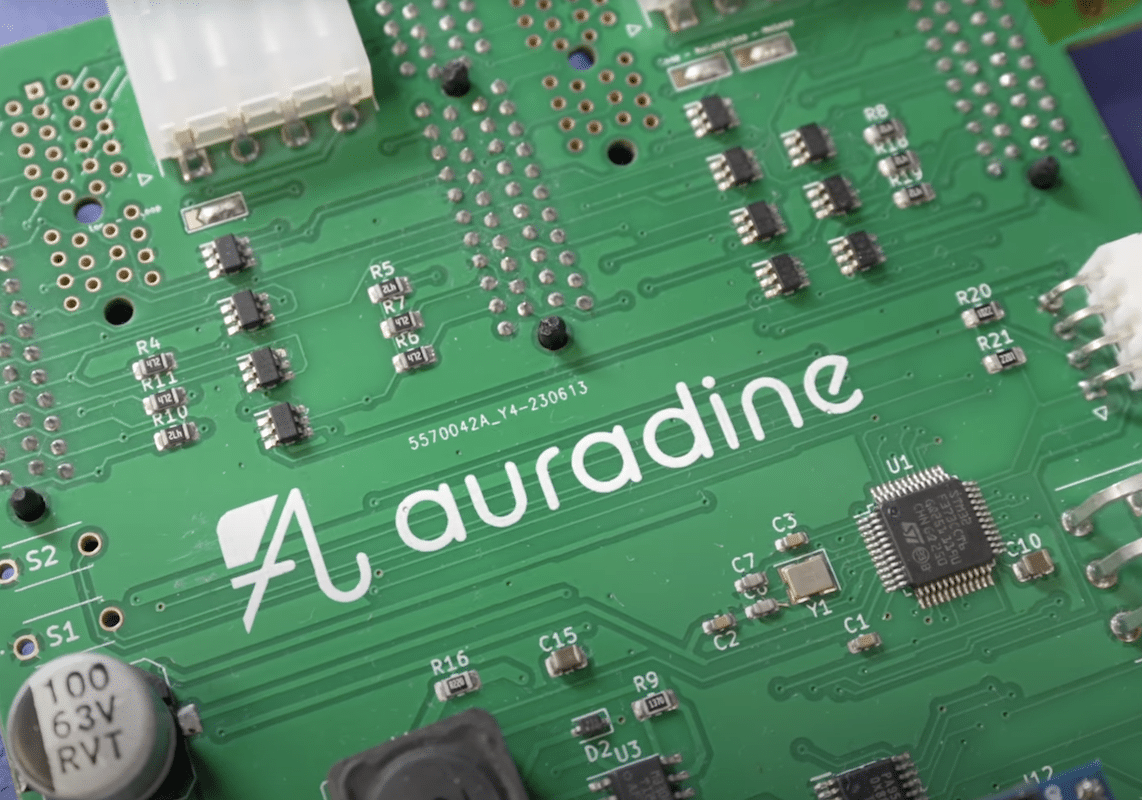
Auradine, a U.S.-based bitcoin mining chip designer that emerged during the last market cycle to challenge incumbents like Bitmain and MicroBT, has rebranded itself as Velaura AI, marking a strategic pivot toward energy-efficient silicon for artificial intelligence infrastructure.
The rebranding, announced earlier this month, reflects a shift in focus from bitcoin mining hardware to AI compute, as power constraints increasingly shape the economics of next-generation data centers. The company framed the move as a response to what it described as a structural bottleneck in AI scaling: energy consumption rather than raw performance.

The transition comes alongside the launch of Titan Core, a silicon design and intellectual property platform that the company says can reduce overall chip power consumption for AI accelerators by as much as 50%.
In a statement on Tuesday, Velaura said the technology targets matrix multiplication workloads — the core computational building blocks of AI training and inference — and can deliver 2–4x improvements in energy efficiency at the circuit level.
The company said such gains could translate into as much as 500 watts of power savings per chip, potentially lowering electricity and cooling costs for hyperscale data centers by tens to hundreds of millions of dollars. Velaura claimed that it is already working with several hyperscalers and chip partners at advanced semiconductor nodes, including 3nm and 2nm, to integrate the technology into next-generation AI accelerators.
The pivot underscores a broader shift underway across the digital infrastructure sector, where surging demand for AI workloads is colliding with limited power availability.
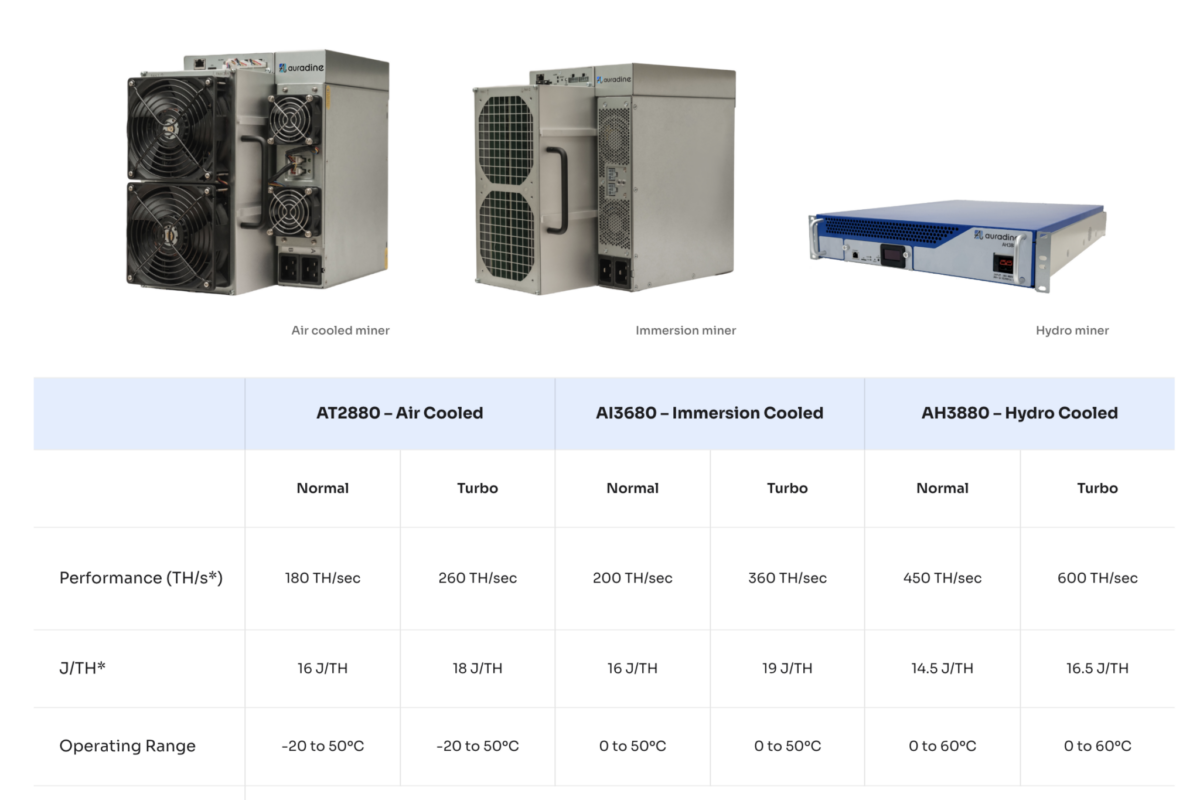
For Auradine, the move also reflects changing conditions in its original market. The company, backed by bitcoin mining giant MARA (NASDAQ: MARA), gained traction as a domestic alternative in bitcoin mining hardware, launching its Teraflux series of ASIC miners with efficiencies comparable to leading products from Bitmain. But the prolonged decline in bitcoin mining profitability — driven by record-low hashprice levels — has dampened demand for new hardware across the industry.
Even dominant manufacturers have been left with excess inventory, highlighting the cyclical nature of the mining equipment market. Against that backdrop, Velaura’s leadership indicated the company no longer sees bitcoin ASICs as its primary growth driver.
In an interview, Chief Strategy Officer Sanjay Gupta said the company plans to work through its existing inventory while continuing to provide post-sale support such as warranties. Unsold units will increasingly be deployed for proprietary mining operations hosted at third-party facilities.
Gupta said that internal deployment could reach “mid-to-high single digit exahash” in the coming months, suggesting Auradine’s remaining footprint in bitcoin mining will shift toward self-operated capacity rather than external hardware sales.
The strategic repositioning mirrors a wider trend among companies historically tied to bitcoin mining, many of which are redirecting capital and engineering resources toward AI and high-performance computing infrastructure. The shift is driven not only by stronger demand visibility in AI but also by the emergence of power as a defining constraint — an area where chip-level efficiency improvements can offer immediate economic benefits.