Sphere 3D, Cathedra Complete Merger to Build 53 MW Bitcoin Mining Platform

Sphere 3D and Cathedra Bitcoin completed their previously announced merger, combining the companies into a Nasdaq-listed bitcoin mining and digital infrastructure operator with 53 megawatts of managed power capacity across five data centers.
The transaction, first announced in March, was completed through a court-approved plan of arrangement under British Columbia law. Sphere acquired all outstanding shares of Cathedra, which is now a wholly owned subsidiary. The combined company will retain Sphere’s name and continue trading on Nasdaq under the ticker ANY. The stock is changing hands at $3.13 after the market opens on Monday, implying a market capitalization of $13 million.
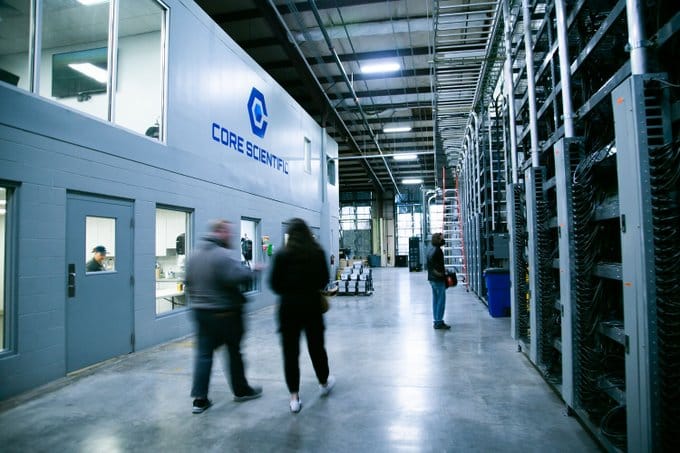
[article_ad_banner]The deal gives Sphere a larger operating footprint across Iowa, Kentucky and Tennessee, combining Cathedra’s energy-focused infrastructure platform with Sphere’s public listing and balance sheet. The company said the enlarged platform includes 1.2 EH/s of installed proprietary bitcoin mining hashrate across owned data centers and third-party hosting providers.

Joel Block, who has assumed the role of chief executive officer of the combined company, said the transaction integrates Cathedra’s infrastructure platform with Sphere’s public-market presence and balance sheet. The company said it now has a pipeline exceeding 100 MW of potential expansion.
The merger comes as smaller public bitcoin miners continue to seek scale and optionality after the sector’s economics were pressured by lower hashprice and rising competition. For miners with access to power and data center infrastructure, the industry’s strategic focus has increasingly shifted beyond bitcoin production alone toward hosting, high-performance computing and potential AI infrastructure use cases.
Sphere and Cathedra said the combined business will generate revenue from both proprietary mining and hosting services. The company said fixed-margin third-party hosting contracts are expected to provide some downside protection, while its own mining fleet gives it exposure to bitcoin mining economics.
Over time, the combined company said it plans to evaluate the highest-value uses for its power capacity, including bitcoin mining, AI model training and other compute-intensive workloads. That mirrors a broader shift among mining infrastructure operators seeking to position available power, grid relationships and high-density computing sites as assets for multiple forms of compute demand.
Under the merger terms, holders of Cathedra subordinate voting shares received 0.123014 of a Sphere common share for each Cathedra share held, while holders of Cathedra multiple voting shares received 12.3014 Sphere common shares for each share held. Cathedra’s warrants, options and certain restricted share units were exchanged for corresponding Sphere securities.
Cathedra’s subordinate voting shares are expected to be delisted from the TSX Venture Exchange and OTCQB at the close of trading on June 2. Cathedra also plans to cease being a reporting issuer and terminate its public reporting obligations.
The combined company’s board consists of Tim Hanley as chair, along with Marcus Dent, Kurt Kalbfleisch, Nicholas Gates and Block. Kalbfleisch, previously Sphere’s chief executive officer and chief financial officer, will remain chief financial officer of the combined company. Thomas Masiero will serve as head of strategy.