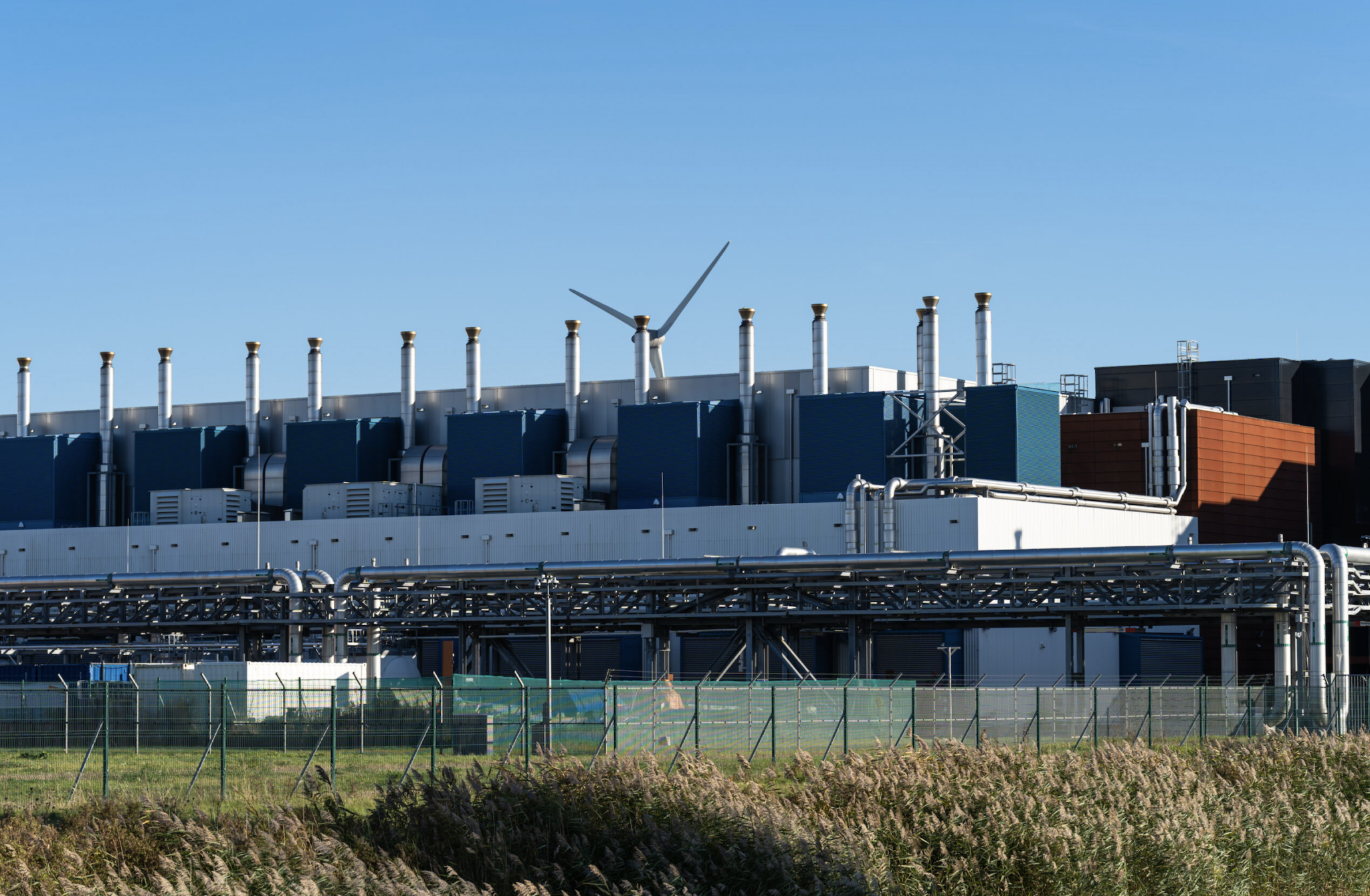
DOE Lets PJM Tap AI Data Center Backup Power During Heat Wave

The U.S. Department of Energy authorized PJM Interconnection to require data centers and other large electricity users to run backup power resources during an early-July heat wave, giving the nation’s largest grid operator another emergency tool as demand threatens to set a record.
The order, signed June 30 by Energy Secretary Chris Wright, allows PJM to direct backup generation at large-load sites — including data centers, hyperscale facilities and other industrial or commercial customers — as a last resort before the grid declares an Energy Emergency Alert 3, or during such an emergency. An EEA 3 is the stage at which firm load interruptions, including power shutoffs, may be needed to preserve system reliability.

PJM’s request defined large loads as sites with at least 50 megawatts of peak load at a delivery point or point of interconnection, a threshold that would capture many AI and cloud-computing campuses. The order covers backup resources including auxiliary or standby generators, directly connected generation and battery storage, whether or not they are synchronized to the bulk power system.
The order runs from 11:59 p.m. Eastern time on June 30 through 11:59 p.m. on July 3. It was issued under Section 202(c) of the Federal Power Act, which gives the energy secretary emergency authority to require generation, delivery or transmission of electricity when demand spikes or when generation or transmission facilities are in short supply.
The action comes as PJM faces a surge in power demand from extreme heat layered on top of longer-term load growth from data centers, electrification and manufacturing. In the order, DOE cited reliability warnings that electricity demand in PJM is growing at its fastest pace in years, driven primarily by data centers, while generator retirements and project delays are tightening available capacity.
PJM told DOE that temperatures were expected to reach the 90s and exceed 100 degrees Fahrenheit in parts of the BGE, Pepco and Dominion zones between June 29 and July 3. In its June 27 application, the grid operator projected tight reserves during expected peaks of 159,563 MW on July 1 and about 162,860 MW on July 2, while warning those figures could rise if temperatures changed.
The forecast has since moved higher. PJM’s market dashboard showed a forecast peak of 166,304 MW for the following day, a level that would exceed the grid operator’s 2006 summer record of 165,563 MW, according to Reuters and PJM market data.
The emergency authority is meant to reduce grid load by shifting large facilities from utility-supplied power to on-site backup power. PJM told DOE it may call on transmission owners and electric distribution companies to help large-load customers bring backup resources online, including by disconnecting those customers from utility source power where lawful.
The order does not apply to backup generation serving critical reliability or public-safety needs, including defense, homeland security, first responder, air traffic control, hospital, 911 call center, water treatment, wastewater, natural gas pipeline and similar facilities.
DOE said the deployment must be limited to the times and operating parameters determined by PJM, and affected resources must comply with environmental monitoring, reporting and recordkeeping requirements “to the maximum extent feasible” while operating under emergency conditions. PJM must notify DOE within one day after directing any backup generation to run and provide a list of those resources.
The data-center backup-power order was issued alongside a separate DOE emergency order that directs PJM to dispatch specified generating units as needed to maintain reliability during the same July 1-3 period. That companion order reflects the broader pressure on PJM’s supply stack as the grid tries to maintain reserves during peak cooling demand.
PJM serves more than 67 million customers across all or parts of 13 states and Washington, D.C., and operates the wholesale power market and transmission grid for much of the Mid-Atlantic and parts of the Midwest and South. The grid operator said in its application that it had already recalled generator and transmission outages where possible and expected to issue maximum-generation and load-management alerts before resorting to firm load interruptions.