Meta Expands Louisiana AI Data Center to 5 GW in $50 Billion Buildout

Meta Platforms is expanding its AI data center in northeast Louisiana to 5 gigawatts of computing capacity, more than doubling the project’s previously planned scale as the technology giant accelerates spending on the infrastructure needed to develop and operate advanced AI systems.
Meta announced on Monday the expansion will lift its investment in the Richland Parish campus to more than $50 billion, making it one of the largest AI infrastructure projects under development globally. The company had previously planned about 2 gigawatts of capacity at the site.

The project, known as Hyperion, is being built on a sprawling site between Rayville and Delhi. It was initially announced in December 2024 as a $10 billion, 4 million-square-foot development expected to employ more than 5,000 construction workers at its peak and create at least 500 permanent positions. Meta now expects more than 1,000 roles at the campus once the expanded facility is operational.
The increased capacity underscores the rapid escalation in infrastructure spending among major technology companies competing to train increasingly complex AI models and deploy AI services to billions of users. Securing sufficient power has become one of the largest constraints on that expansion, pushing hyperscalers toward multibillion-dollar campuses in regions with available land, generation and transmission capacity.
Meta said it will invest more than $1 billion in roads, water and wastewater systems surrounding the Louisiana development. The company also said Louisiana businesses have received more than $1.6 billion of contracts since construction began in December 2024.
The construction boom has already produced an unusual tax windfall for Richland Parish, a rural community of about 20,000 people. Teachers in the parish recently received annual bonuses of as much as $50,000, compared with bonuses of about $10,000 a year earlier, after sales-tax collections increased alongside purchases and economic activity related to the project.
The bonuses were funded through increased local tax revenue rather than a direct payment from Meta. That distinction is important because a portion of the sales-tax surge is linked to construction activity and may not continue at the same level once the campus is completed.
“Last year, our teachers received a $10,000 bonus, this year that check was over $50,000,” Richland Parish School District Superintendent Sheldon Jones said in Meta’s announcement. “It’s life-altering for our teachers and their families, and it’s transforming our schools.”
Jones said the higher compensation had also improved teacher recruitment, with every candidate interviewed by the district this year holding full certification for the first time in his 30-year career.
Meta is separately donating $5 million to Louisiana Delta Community College to fund scholarships and training for data center-related jobs. Graduates of Richland Parish high schools beginning with the class of 2026 will be eligible for full scholarships for qualifying trade certificates and courses.
The company has also provided more than $1 million in community grants, including funding for science, technology, engineering and mathematics programs, emergency-service equipment and local youth organizations.
Local businesses have reported sharp increases in demand from construction workers and contractors. Holy Tacos, a restaurant opened after Meta selected the parish, now serves hundreds of customers a day, according to its owners. HeBrews Coffee said daily customer traffic rose from about 40 people to more than 130 as the company expanded to three locations.
Mayo Tours, a local charter-bus operator, said its fleet increased to 102 coaches from 40, with many drivers working at the Meta site earning more than $80,000 annually.
Those benefits illustrate the immediate economic impact of a large construction project in a relatively small community, though the longer-term effect will depend partly on how many permanent jobs remain after construction and how infrastructure and public-service costs are distributed.
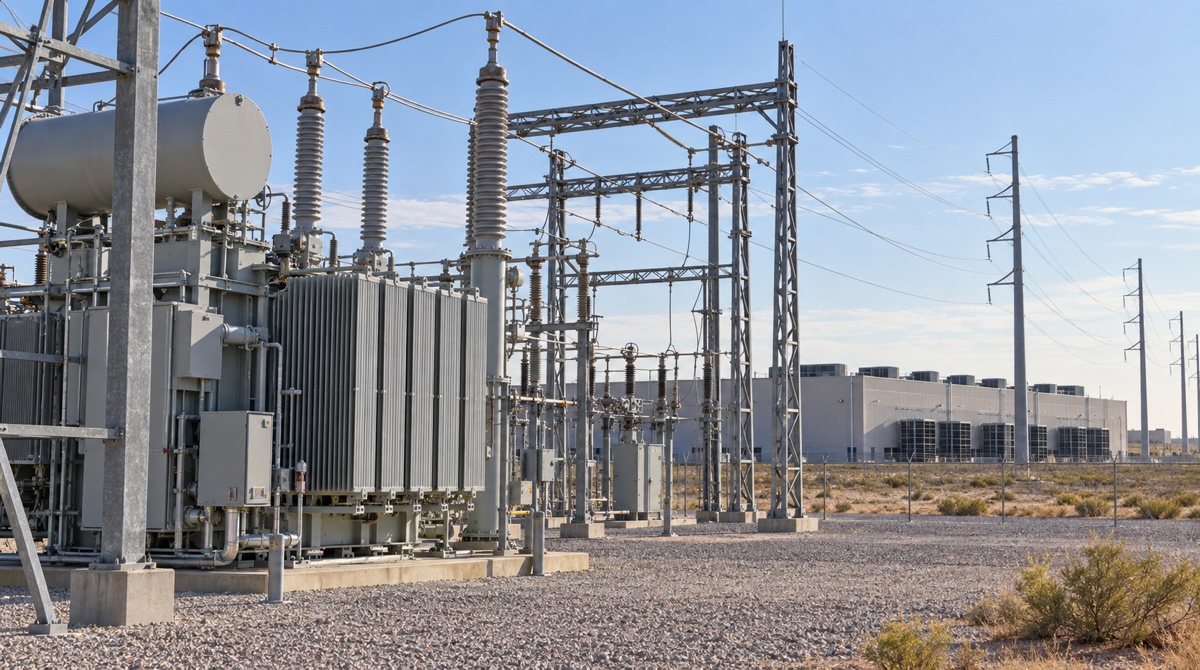
Powering the expanded campus will require a significant buildout of Louisiana’s electricity system. Meta said its latest agreement with Entergy Louisiana will support seven new natural gas-fired generating plants, three grid-scale battery projects, upgrades to existing nuclear generation and additional purchased power.
The new agreement follows an earlier arrangement covering three gas-fired plants. Together, the planned generation and grid projects would support the enormous electricity requirements of the Richland Parish campus and other customer demand.
Meta said it will pay the full cost of the energy, water and related infrastructure used by the data center. The company and Entergy estimate the latest agreement will save the utility’s customers more than $2 billion over 20 years, in addition to an estimated $650 million of savings associated with the initial agreement.
Those estimates remain subject to regulatory assumptions and have drawn scrutiny as utilities across the US seek approval for power plants and transmission projects tied to data center demand. Critics have questioned whether households could ultimately bear some costs if projected demand, construction expenses or customer commitments change. A recent report also raised questions about potential customer bill increases connected with a separate Entergy power-plant acquisition, despite assurances that Meta-related infrastructure would not shift costs to existing ratepayers.
The Louisiana project is central to Meta’s effort to expand the computing resources behind its AI models, advertising systems and consumer products. Chief Executive Officer Mark Zuckerberg has said the company intends to build several large-scale AI clusters as it competes with Microsoft, Alphabet, Amazon and other technology companies.
The Richland Parish expansion also illustrates how the AI infrastructure race is reshaping energy planning. A single 5-gigawatt computing campus would require power on a scale comparable to several large conventional power stations, tying the pace of AI development increasingly closely to electricity generation, transmission construction and local permitting.
“From the beginning, this project has always been about more than building infrastructure — it’s about building alongside the community,” Rachel Peterson, Meta’s vice president of data centers, said in the company’s announcement.
Meta’s increased commitment sends a strong economic signal for northeast Louisiana, but it also substantially raises the stakes for the project. The company must now deliver one of the world’s largest computing campuses while coordinating billions of dollars of construction, energy and public infrastructure in a rural region experiencing growth on a scale it has never previously managed.