NextEra, Brookfield Plan $100B AI Data Center Campus at Former Kentucky Nuclear Site

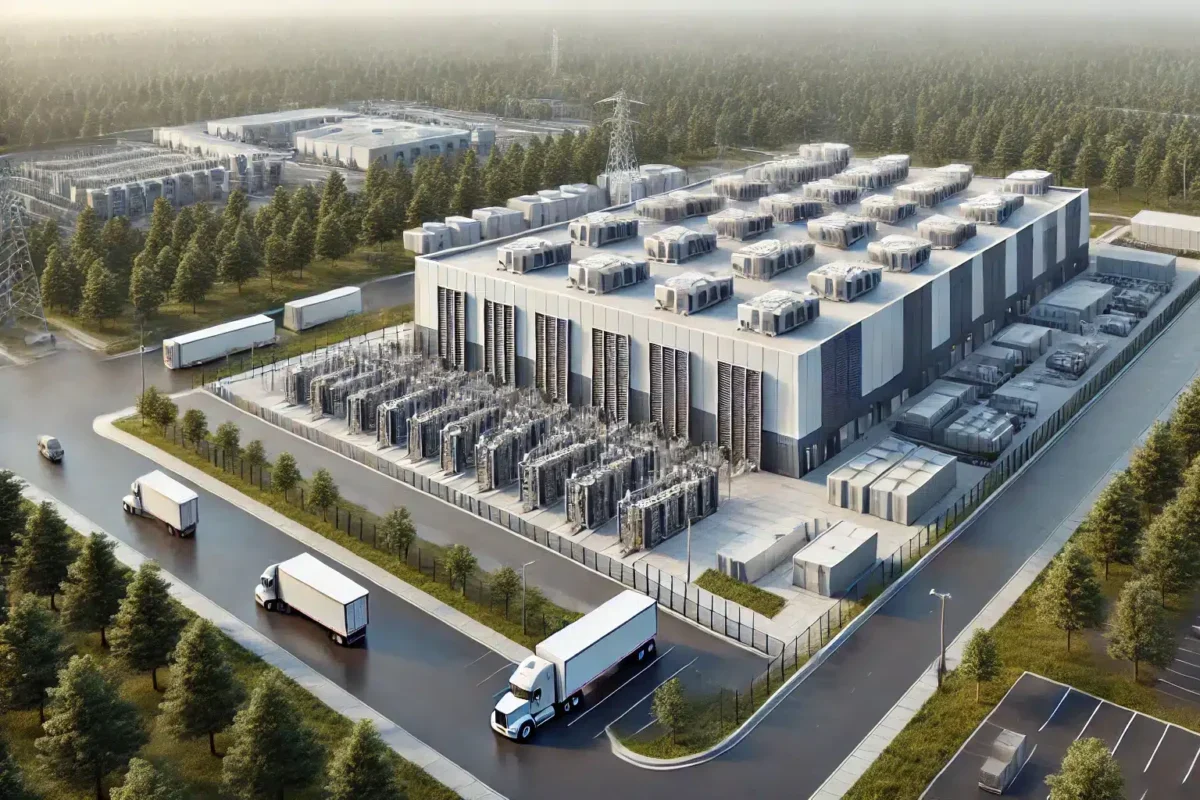
NextEra Energy (NYSE: NEE) and Brookfield Asset Management plan to develop A data center power complex potentially involving $100 billion of private investment at a former uranium-enrichment site in western Kentucky, as the US seeks to pair rapidly growing AI infrastructure with new electricity supply.
The campus at the US Department of Energy’s Paducah Site is designed to support as much as 1.8 gigawatts of utility capacity and more than 1.2 GW of computing capacity when fully built, according to announcements Wednesday from the companies and the federal agency.

NextEra would build and own up to 2 GW of natural-gas-fired generation and as much as 2.6 GW of battery energy storage at or near the site. Brookfield was selected to lease the federal land and develop and operate the data center campus. Initial operations are expected in 2028, with the coalition targeting full construction by 2032. The Energy Department separately said construction is expected to finish in 2031.
The project is one of the largest proposed AI infrastructure developments in the US and reflects an emerging model in which data center developers bring new generation to meet their electricity demand. That approach is intended to address growing concern that large computing campuses could strain regional grids and raise power bills for households and smaller businesses.
Still, the Paducah plan remains at an early stage. It is subject to negotiation and execution of definitive agreements, and the companies did not identify any data center tenants or disclose how much of the proposed investment has been contractually committed.
The power-service agreement involving Big Rivers Electric Power Corp. and Jackson Purchase Energy Cooperative will also require approval from the Kentucky Public Service Commission. Big Rivers would provide wholesale electricity service, while Jackson Purchase would deliver retail service. Paducah Power System is participating as a community partner.
The companies said the new generation and storage would be added in stages as the campus grows. The proposed 4.6 GW of energy resources exceeds the campus’s planned utility capacity, potentially allowing surplus electricity to flow onto the regional grid. Battery storage, however, does not produce electricity and would need to be charged from the gas plants or other grid resources.
The structure is being promoted as a test of the Trump administration’s Ratepayer Protection Pledge, under which technology companies are expected to cover the power infrastructure needed for data centers rather than shift those costs to existing electricity customers.
“The data center will bring its own power, pay for its own power infrastructure and create good-paying jobs for local workers,” NextEra Chief Executive Officer John Ketchum said in the announcement.
The development is expected to create about 8,000 construction jobs and 600 permanent operations positions, according to the coalition. Those figures, like the investment and capacity targets, depend on the project reaching full buildout.
The 3,556-acre Paducah facility began operating in the 1950s and produced enriched uranium for US nuclear-weapons programs and later for commercial reactor fuel. Enrichment operations ended in 2013, and portions of the government-owned property remain subject to a long-running environmental cleanup.
Its legacy infrastructure — including transmission connections, water, roads, fiber and industrial land — could shorten development timelines compared with building a similarly sized campus on an undeveloped site. The Energy Department sought proposals for data centers and related power projects at Paducah in November 2025 as part of an effort to reuse former federal energy sites. The solicitation required developers to finance, operate and eventually decommission their projects while securing the necessary interconnections and permits.
Brookfield CEO Bruce Flatt described Paducah as the starting point for the firm’s plan to invest $100 billion in AI infrastructure. The announcement did not provide a breakdown of the spending between buildings, servers, generation, storage and transmission, nor did it disclose the expected ownership or financing structure for the computing equipment.
For NextEra, the selection expands its push into power projects tied to AI demand. The company has also pursued large natural-gas developments intended to supply data center campuses in Texas and Pennsylvania, alongside its existing renewable-energy, battery-storage and regulated utility businesses.
NextEra shares were down about 0.9% at $88.46 in Wednesday trading, while Brookfield Asset Management fell about 1.4% to $47.35.