TEM Explainer Series: Your Electricity Bill is More Than the Electricity You Use

Are Data Centers the Problem? Introducing TheEnergyMag’s Four-Part Installment
Data center developers often promise local jobs, noise controls, and environmental protections. Residents have a more immediate question: how will these power-hungry projects affect their electricity bills?
[article_ad_banner]Their concerns reflect growing demand. US data centers consumed about 4.4% of the country’s electricity in 2023, according to analysis cited by the US Department of Energy. That analysis projects data centers, including those supporting artificial intelligence, could account for 11.8% by 2030.

As ratepayers question who should pay for that growth and midterm campaigning intensifies, the White House has challenged developers to sign the Ratepayer Protection Pledge. Participating technology companies commit to covering additional service costs and negotiating rates that pay for their power and infrastructure even if usage falls short.
In June, the Federal Energy Regulatory Commission, which oversees interstate electricity transmission, directed six regional grid operators to review or reform rules for connecting large users. Ohio added protections for some household customers in August. Both address concerns about shifting data center costs to other ratepayers.
Against this backdrop, TheEnergyMag is rolling out a four-part series, explaining how data center demand affects household bills and what can prevent higher demand from driving higher prices.
First, let’s unpack a typical monthly electricity bill.
Understanding the Components of an Electricity Bill
Paying your electricity bill goes beyond electrons– it supports the entire grid system that makes electricity available whenever you need it.
Think of an online order. Delivery depends on warehouses, vehicles, fuel, logistics software, and staff—not just the item’s shipping charge.
Electricity follows a similar journey: generation, long-distance transport, conversion for local use, and delivery overseen by operators and regulators.
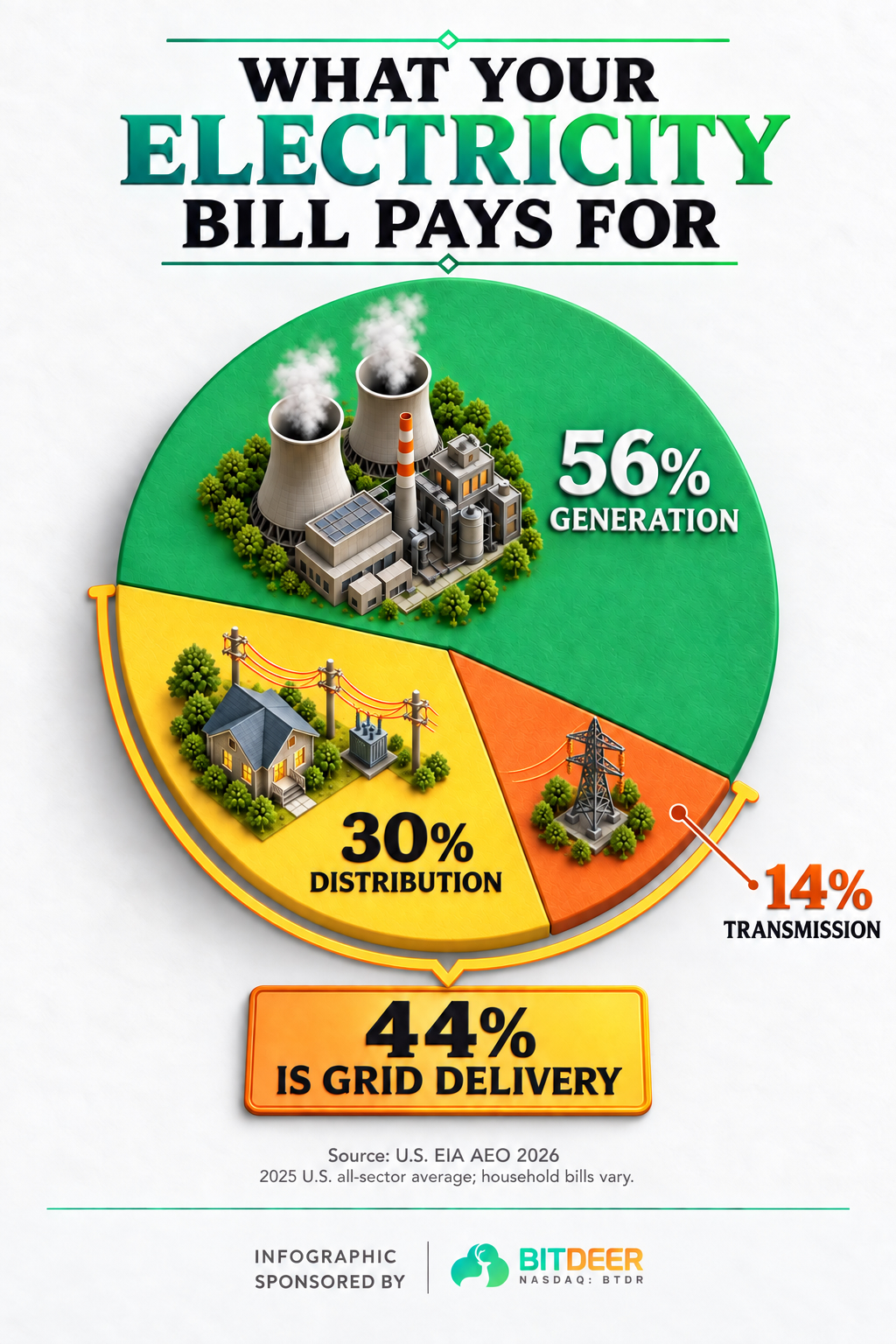
The U.S. Energy Information Administration‘s (EIA) national electricity price figures for 2025 illustrate that split:
- Supply or Generation Charges: ~56% for producing electricity
- Transmission Charges: ~14% for long-distance transport
- Distribution or Delivery Charges: ~30% for local delivery
- Reliability or ISO Charges: less than 1% for real-time grid operation and management
Generation
Generation charges reflect the cost of producing electricity as grid supply and demand change.
Grid operators generally dispatch the lowest-cost available generators first, adding more expensive resources as demand increases.
This is why generation costs typically increase alongside commodity prices for the underlying fuel, like natural gas, diesel, heating oil, or coal. Russia’s 2022 invasion of Ukraine triggered a global gas supply crunch. Europe’s leading benchmark gas price averaged more than seven times its 2016–2020 average during the first 11 months of 2022, helping drive electricity prices to record highs globally.
Transmission
Transmission charges cover electricity’s long-distance journey from generators to demand centers. The towering lines are the grid’s highways, carrying power efficiently over long distances.
Distribution
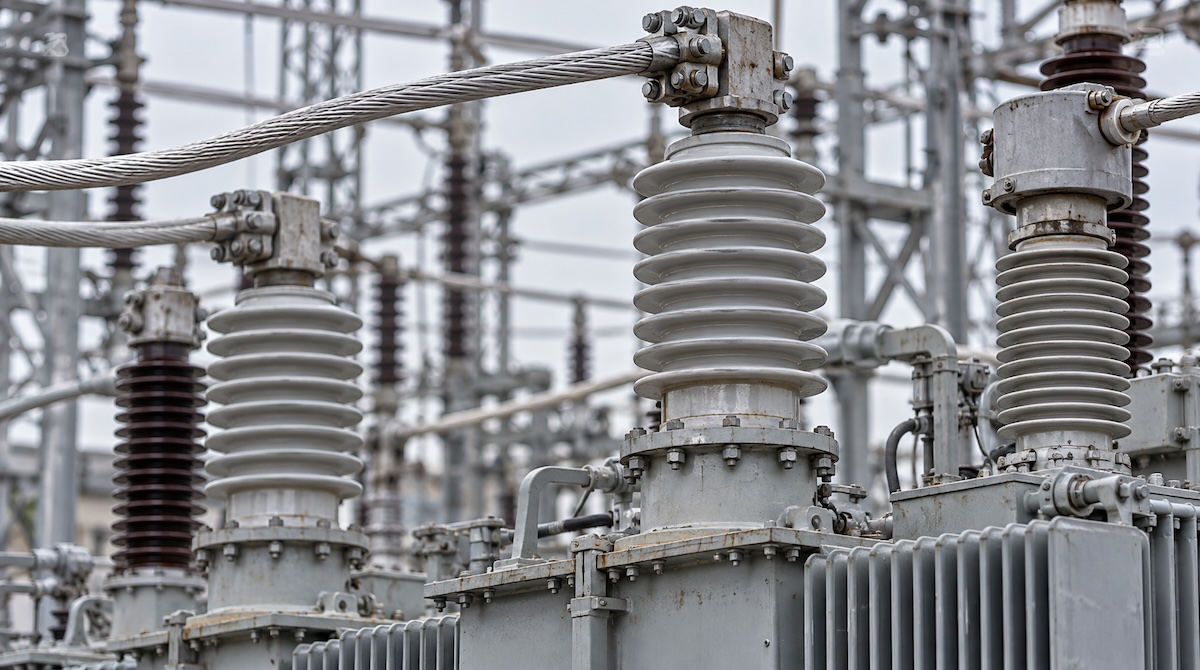
Distribution is the neighborhood journey. Substations and local utility poles deliver electricity at voltages household appliances can use. If transmission lines are highways, distribution networks are local roads and driveways.
Both networks need maintenance, with more frequent upgrades at the distribution level, where storms and even squirrels can disrupt service.
Utilities manage these networks across U.S. states and submit maintenance costs to public utility commissions for rate approval. Rates typically allow a set return on capital invested in building and maintaining the systems.
Together, transmission and distribution account for approximately 44 cents of every dollar on your bill.
Other Charges: The Reliability Premium
The system must also be ready for its busiest moments.
Like a bridge built for rush-hour traffic, the grid must handle simultaneous surges in household, business, and industrial demand, such as during heat waves. It also needs backup infrastructure for equipment or transmission failures.
All ratepayers finance that readiness through broader transmission and distribution charges or separate reliability charges. Grid operators also balance generation and demand in real time, adding small but essential costs to monthly bills.
A higher bill can reflect increased usage, higher generation costs, or spending to maintain and expand the grid. These variables can change simultaneously.
How Do Data Centers Impact this Balance?
Imagine a delivery company gaining a major customer. Spare truck capacity could help spread existing costs and lower rates. But buying a new fleet and a larger warehouse adds substantial expense, making who pays crucial.
The same applies to electricity. Data centers may require new generation or network upgrades, or use spare capacity and existing infrastructure more efficiently, spreading grid costs across more customers. Household savings depend on the costs and rate design, including whether large users pay different rates.
An Ohio utility illustrates how specialized rates can limit the risk of other customers paying for data center infrastructure. As of July 2024, qualifying new data centers in American Electric Power (AEP) Ohio’s territory must sign contracts with eight- to 12-year minimum terms and pay for 85% of reserved power capacity, even if they use less.
For wary residents, the questions are straightforward: what infrastructure is needed, who pays, and what happens if the project changes course? The answers are more complicated.
Data center impacts depend on more than project size. They reflect the costs and responsibilities of the stakeholders generating, transporting, and managing electricity for all ratepayers.
Understanding the grid’s components and their place on electricity bills helps distinguish whether a new data center adds costs or helps cover existing ones. Next, we’ll examine whether better use of the grid can reduce pressure on electricity prices.