The Same Engine Behind Bitcoin and AI

In the first installment of this series, we examined a simple but powerful idea: Bitcoin mining was always designed as an energy system.
In March, the Bitcoin network crossed a historic milestone — more than 20 million Bitcoin have now been issued, leaving less than five percent of the total supply yet to be mined. But while the supply of coins is slowly nearing its limit, the energy infrastructure behind the network will continue operating for more than a century.

That design detail matters more today than it did when Bitcoin launched.
That’s because the rest of the technology world is suddenly discovering the same constraint that Bitcoin miners have long managed: Bitcoin mining and AI processing ultimately depend on electricity. In this piece, we look at how the physical infrastructure behind Bitcoin mining compares with modern AI data centers—and why both industries are built on the same underlying system.
The AI Boom and the Limits of Power
Artificial intelligence has triggered a global race to build data centers.
Tech companies are deploying hundreds of thousands of Graphics Processing Unit (GPUs) to train increasingly complex AI models. GPU chips have become the workhorse of modern artificial intelligence, converting vast amounts of electricity into computation at unprecedented scale.
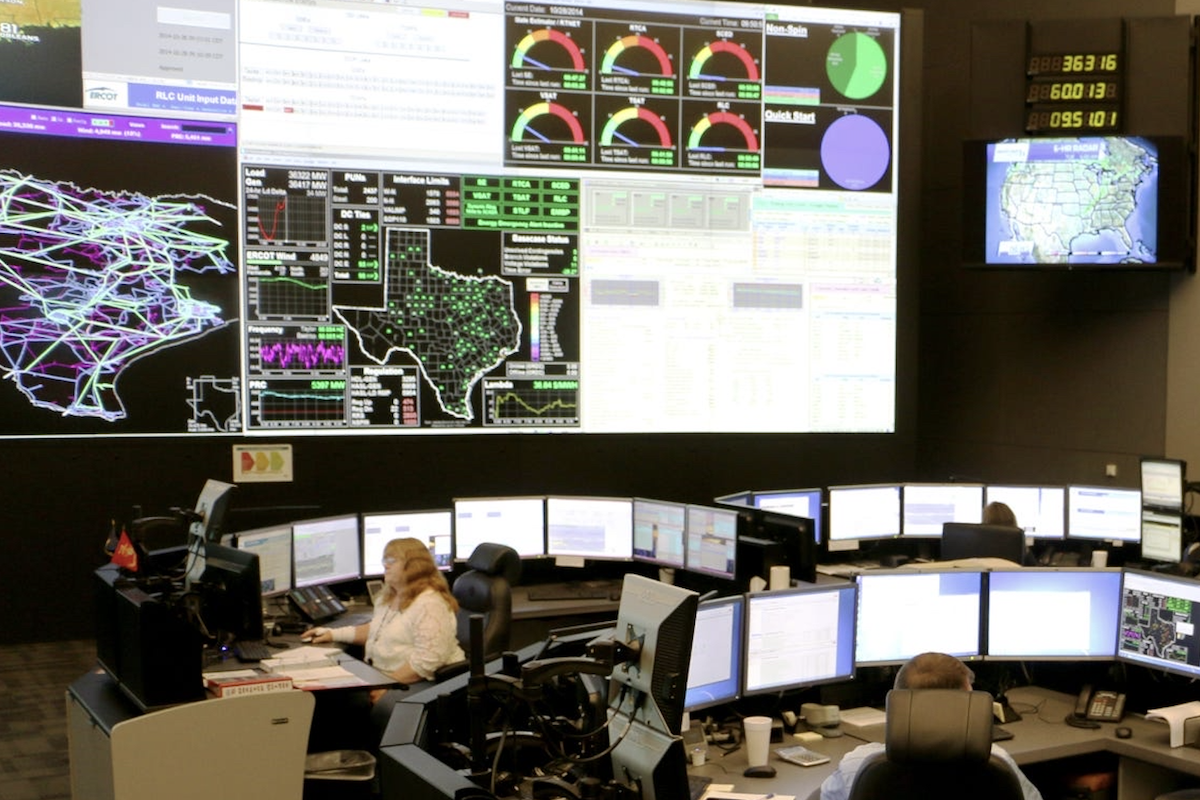
At that magnitude, data centers depend on a large and continuous supply of electricity, often comparable to the power demand of small towns.
As a result, the bottleneck for AI infrastructure is no longer chips or software alone. It is access to power.
Utilities are fielding gigawatt-scale requests for electricity. Grid connection queues are swelling, and power plants that were once considered surplus capacity are becoming strategic assets.
At the same time, a parallel approach is emerging. Rather than relying solely on the grid, some operators are starting to secure power more directly—developing or co-locating with dedicated energy sources such as natural gas, nuclear, or renewables. This “bring your own power” model, developed through partnerships with local and regional utilities, reflects a growing recognition that access to reliable electricity is becoming a defining constraint for cutting-edge data infrastructure.
In short, the computing industry is colliding with the realities of the physical grid.
But for Bitcoin miners, this environment is not new.
For more than a decade, mining companies have been searching for the same thing AI developers are now pursuing: reliable, highly efficient, and scalable electricity.

Two Industries, One Infrastructure Stack
At first glance, Bitcoin mining and AI computing appear to belong to entirely different systems.
One secures a digital currency network. The other trains machine-learning models.
But when you look at the physical infrastructure behind both industries, the similarities are striking. Both rely on the same foundational supply chain:
Semiconductor Manufacturing: Advanced chips power both systems. Bitcoin mining uses specialized ASIC chips, while AI processes rely on GPUs.
Hardware Assembly: Semiconductors are packaged into computing units — mining machines in one case, GPU servers in the other.
Global Logistics: Machines must be transported, installed, and integrated into facilities capable of running continuously.
Energy Infrastructure: Both systems depend on large volumes of electricity delivered through substations, transformers, and connections to the grid.
Cooling and Mechanical Systems: Mining and AI processing generates immense heat. Efficient cooling — air, liquid, or immersion — becomes essential.
Operational Software: Software and monitoring systems ensure the machines run continuously and efficiently.
Strip away the differences in workload, and both industries are fundamentally solving the same engineering problem: how to convert large amounts of electricity into useful computation at an industrial scale. This is the fundamental question behind global technology innovation.
When Compute Meets Energy
The convergence between Bitcoin mining and AI data centers does not mean the two industries are identical.
Their workloads are different. Their hardware is different. And importantly, the way they generate revenue is fundamentally different.
Bitcoin mining operates on an open network. Once machines are connected and running, they automatically compete to earn rewards. There are no customers to acquire, no contracts to negotiate, and no service commitments to maintain. If machines go offline, revenue simply pauses and resumes when operations restart.
Modern AI data centers operate differently. Their revenue depends on customers. Operators must secure contracts, deliver computing capacity reliably, and maintain operational functions. The business is not just about infrastructure—it is also about market strategy, client relationships, and consistent service delivery.
But at the infrastructure level, the overlap is unmistakable.
Both industries require:
- access to reliable and scalable power
- specialized facilities designed for efficient processing
- cooling systems capable of managing high-level computing
- continuous operational functioning
- supply chains capable of deploying equipment at scale
In other words, they operate on the same physical foundation. And that foundation is energy.
When Bitcoin launched in 2009, few people imagined that the network’s most enduring innovation might not be digital money itself, but the infrastructure built to support it.
Bitcoin miners spent more than a decade learning how to convert electricity into processing at a large scale. Now, as AI reshapes the global technology landscape, the rest of the computing industry is confronting the same challenge: the future is constrained by access to power.
This raises an important question.
If energy is the real currency of computing, who knows how to reliably and efficiently manage it?
Bitcoin miners may not have set out to build AI infrastructure when they started. But by solving the hardest problem in large-scale computing — how to secure and operate high amounts of energy — they have laid the groundwork for the next phase of the global digital economy.
In the next installment of this series, we will examine how Bitcoin mining companies actually make money, — and how their business models increasingly resemble those of modern data-center operators.
Once computation becomes an energy business, the line between mining and AI infrastructure begins to blur.
And that convergence is only beginning.