Hut 8 Raises $3.25 Billion Debt at 6.192% for Fluidstack-Backed AI Data Center
UPDATE – May 1, 2026: Hut 8 (NASDAQ: HUT) closed the issuance of the $3.25 billion senior secured notes on April 30, priced at 6.192% and rated BBB− by S&P and Fitch.
Hut 8 is seeking to raise $3.25 billion in senior secured notes to fund a large-scale AI data center in Louisiana, the latest addition to a wave of bitcoin miners tapping into the high-yield bond market with infrastructure-style financing backed by long-term compute contracts.
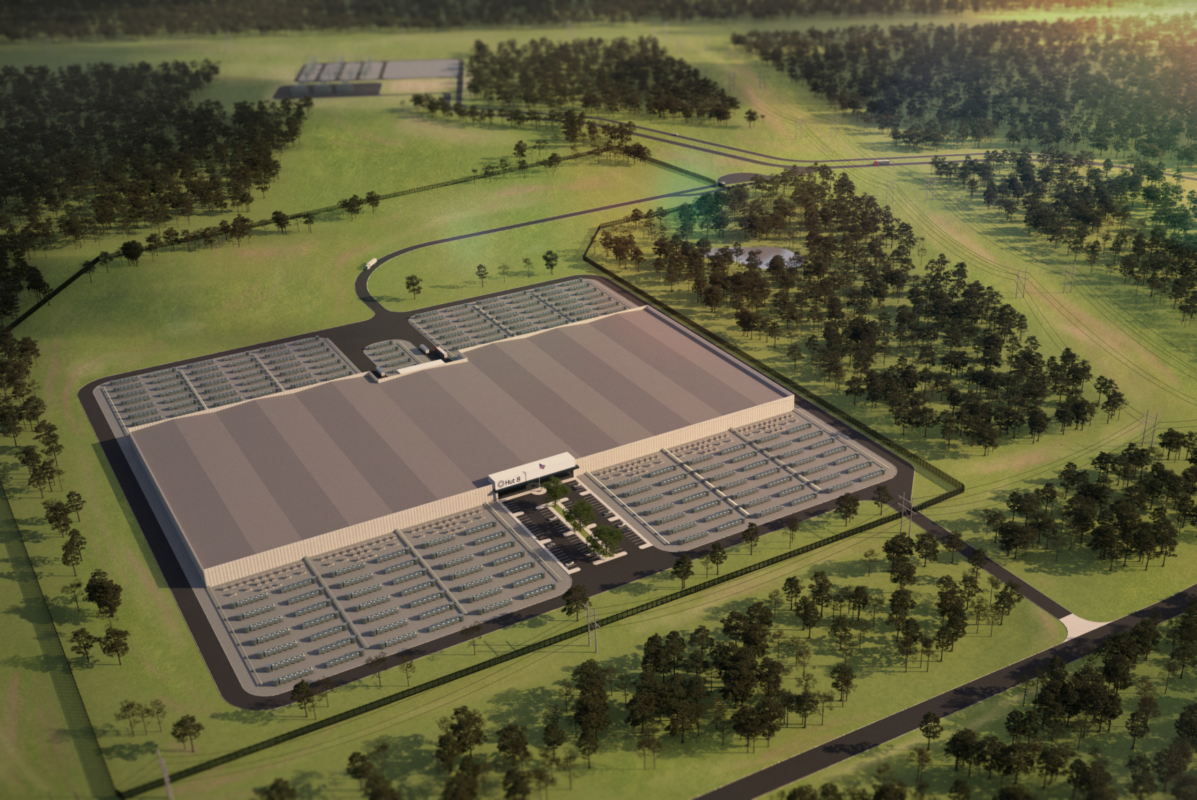
The notes, due 2042, will be issued by a Hut 8 subsidiary and used to finance construction of a 245-megawatt data center at the company’s River Bend campus in St. Francisville, according to an April 27 filing. Proceeds will also reimburse prior equity spending and fund reserves tied to the project.
The development is anchored by a 15-year, $7 billion lease with Fluidstack, which fully contracts the initial 245 MW of capacity. The agreement also grants Fluidstack a right of first offer for up to an additional 1,000 MW at future phases of the campus, contingent on expanding power availability. Google provides a financial backstop covering obligations for the 15-year base lease term.

Illustrative financial disclosures included in the offering materials show the scale of that expected cash generation. The project is modeled to produce about $171 million in revenue in its first full year of operations, ramping steadily to roughly $547 million annually by 2041. Because operating costs are largely passed through or embedded in the lease structure, net operating income closely tracks revenue over the life of the project.
After debt service, the data center is projected to generate levered free cash flow of about $37 million in 2027, rising to more than $100 million annually through the early 2030s and reaching roughly $129 million at peak before tapering toward the end of the debt term.
The financing is structured at the project level through Hut 8 DC LLC, aligning it more closely with infrastructure and project finance models than the balance sheet-driven borrowing historically used by miners.
That shift underscores how publicly traded mining firms are repositioning themselves as developers of AI and high-performance computing infrastructure, as persistently low hashprice and volatile Bitcoin mining economics pressure margins across the sector.
In contrast to mining revenue—which fluctuates with network difficulty, transaction fees and Bitcoin prices—the River Bend project is backed by a long-term lease that locks in capacity payments over more than a decade, providing visibility that rating agencies view as critical to supporting investment-grade credit.
Credit rating agencies Fitch and S&P Global Ratings assigned the offering a preliminary BBB-, placing the deal at the lowest rung of investment grade.
Still, S&P flagged risks typical of large-scale greenfield developments, including construction execution, reliance on a single tenant and the need to bring the facility online on schedule to meet projected cash flows.
The size of the raise highlights the growing capital intensity of the sector’s pivot toward AI infrastructure. At more than $3 billion for a single campus, the financing places Hut 8 alongside a wave of multi-billion-dollar buildouts pursued by companies such as Core Scientific (NASDAQ: CORZ) and Applied Digital.