Ionic Raises $400M as AI Revenue Tops Bitcoin Mining Ahead of Nasdaq Listing

Ionic Digital, the bitcoin miner formed out of the Celsius bankruptcy, filed to go public on Nasdaq after a sharp pullback in its mining operations and a rapid shift toward AI infrastructure leasing.
The company reported $51.4 million in revenue for the first quarter of 2026, with digital infrastructure leasing accounting for $44.0 million, compared with just $7.4 million from bitcoin mining. A year earlier, Ionic’s revenue came entirely from mining, which generated $41.1 million in the first quarter of 2025. Its net loss narrowed to $13.0 million from $28.0 million over the same period.

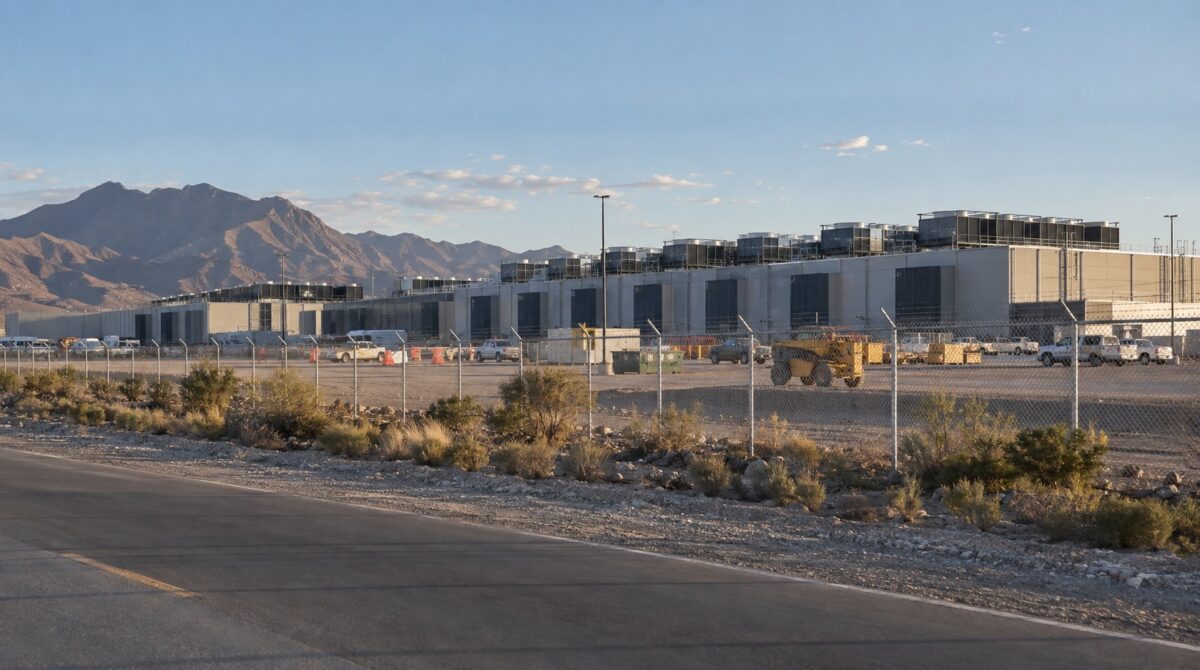
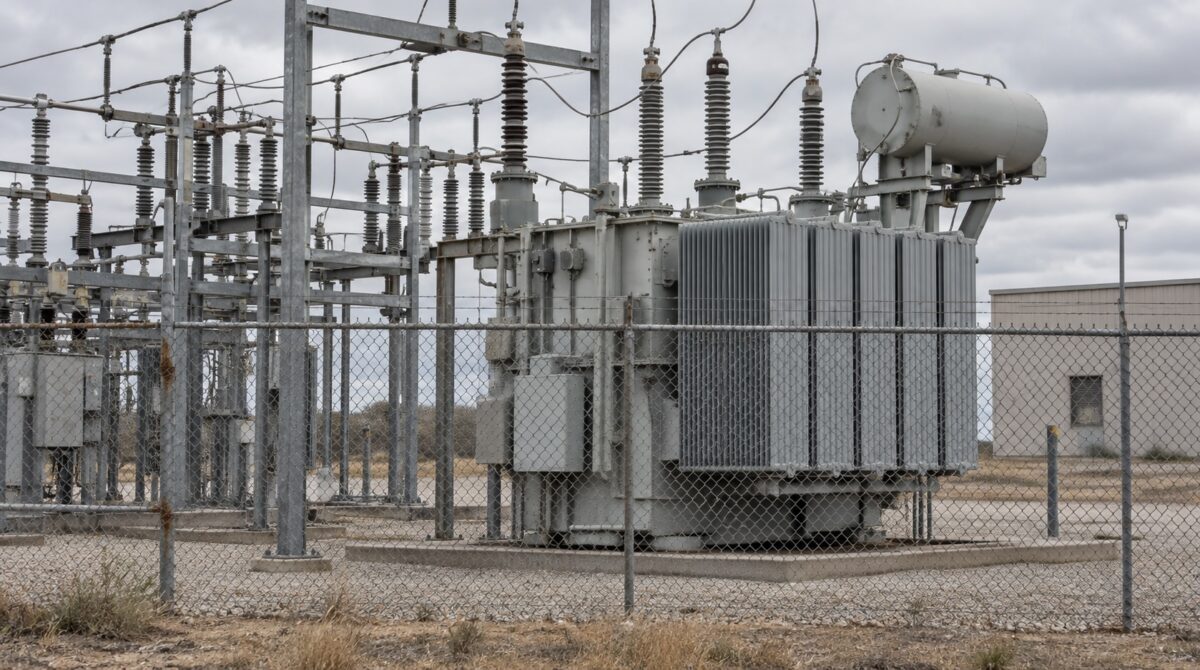
The revenue shift reflects Ionic’s decision to repurpose its flagship Ward County site in West Texas for AI and high-performance computing instead of bitcoin mining. Ionic entered into a 126-month “triple net” lease with Nscale in October 2025, committing the full 234 megawatts of current power capacity at Ward County. The company received its first payment in November 2025, while monthly fixed lease payments are scheduled to begin in August 2026. Payments under the lease represent about $1.95 billion of contracted revenue.
Ionic amended the Nscale lease in February 2026 to add a contractual obligation for Nscale to lease another 89 MW if the capacity becomes available, at the same price per megawatt. If Ionic secures that additional capacity in the second half of 2027, total contracted revenue under the Nscale agreement would rise to about $2.6 billion. The company cautioned that the added power remains subject to regulatory approval and that Nscale faces no penalty if Ionic cannot deliver it.
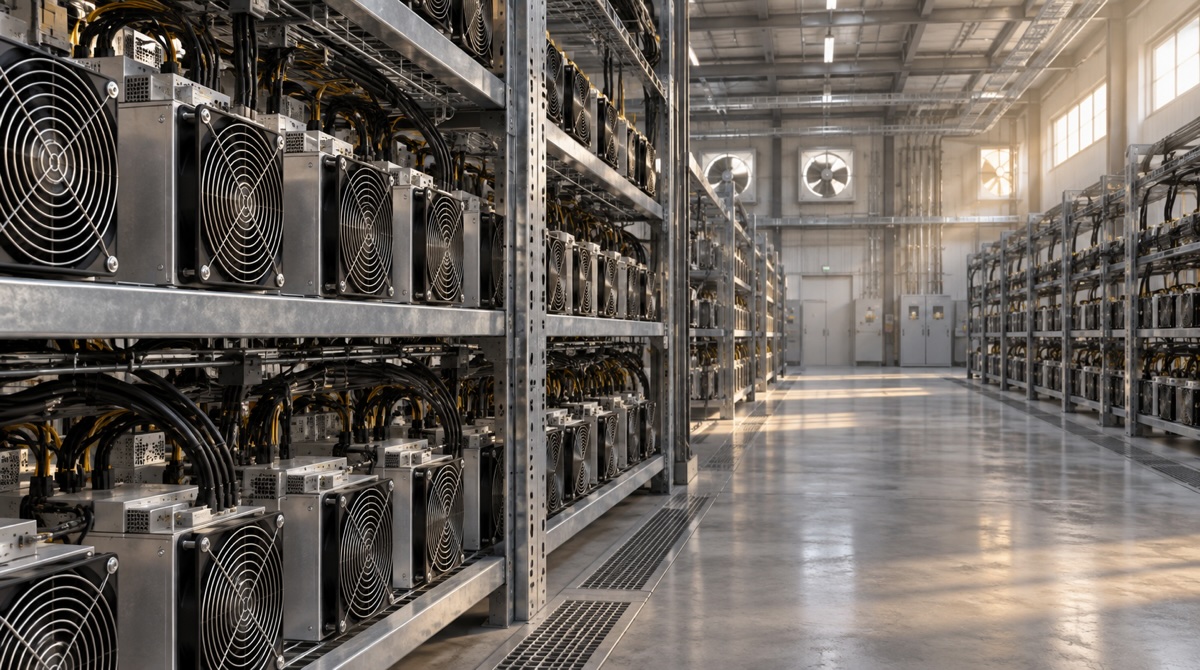
At the same time, Ionic has dramatically scaled back its bitcoin mining footprint. As of March 31, the company owned about 120,600 miners with a total nameplate hashrate of 12.2 EH/s, but only about 23,200 miners were active, contributing 2.0 EH/s. That compares with about 116,500 active miners and 8.9 EH/s of contributed hashrate a year earlier.
The company mined 95.7 bitcoin during the first quarter of 2026 and sold none, compared with 1,331 bitcoin mined during 2025. In 2025, Ionic sold 1,009 bitcoin at an average price of $100,547, generating $101.5 million in gross proceeds.
Ionic said it is consolidating what remains of its mining operations around four Midland-area sites in Texas: East Stiles, Garden City, Rebel and Stiles. Together, the sites represent 112 MW of current power capacity across about 59.5 acres, with another 10 MW expected at East Stiles in 2027. The company said it intends to bring those sites to market for HPC and AI development and may eventually wind down bitcoin mining over time, although it has not set a timetable or committed to exiting mining.
The S-1 shows that Ionic is now trying to position itself less as a hashrate-growth story and more as a power-and-land monetization platform. Its Ward County site currently has 234 MW of installed capacity, and the company is seeking to expand the property to as much as 700 MW.
Ionic expects capital spending of about $40 million through the first half of 2027 for the current 234 MW plus the additional 89 MW, and about $64 million for a full 700 MW buildout. It plans to fund the work with cash on hand and, if needed, sales of bitcoin held in treasury. Nscale has a right of first refusal on additional Ward County capacity, while Nscale has granted Microsoft an option for additional power at the property if it becomes available starting in the second half of 2027.
As of March 31, the company had $34.9 million of cash and cash equivalents, $192.1 million of cryptocurrency assets and $554.0 million of total assets. Total liabilities were $17.2 million. The filing also said Ionic had no debt and held 2,815.6 bitcoin in treasury as of March 31.
The company’s proposed public listing would be structured as a direct listing on the Nasdaq Global Select Market under the ticker “IOND,” rather than a traditional underwritten IPO. The filing registers the resale of up to 10.8 million shares held by selling stockholders. Ionic said it will not receive proceeds from those sales. About 37.2 million additional outstanding Class A shares may also be freely sold in the public market under securities-law exemptions tied to the Celsius bankruptcy process.
Ahead of the listing, Ionic completed a $400 million private placement on June 26, before an estimated $16.8 million in transaction fees. The company sold about 7.55 million shares of Series A convertible preferred stock at $53 per share, along with three tranches of warrants to buy about 1.01 million Class A shares each at exercise prices of $63.60, $74.20 and $87.45. The preferred shares convert into Class A common stock upon a Nasdaq listing or other qualifying public-market transaction. Investors agreed not to transfer the preferred stock, the converted Class A shares, the warrants or warrant shares at prices below $70 per share for six months after listing, subject to limited exceptions.
Ionic was incorporated in January 2024 to acquire mining assets from Celsius Mining, the mining affiliate of bankrupt crypto lender Celsius Network. It began operations on Feb. 1, 2024, after acquiring the assets and assuming certain liabilities under Celsius’ confirmed reorganization plan. Ionic initially outsourced parts of its mining operations to Hut 8 (NASDAQ: HUT), but terminated that master services agreement in December 2024 and took operational control of its sites.