
Cipher Details Conditional Texas Grid Status for 3.2 GW of Projects
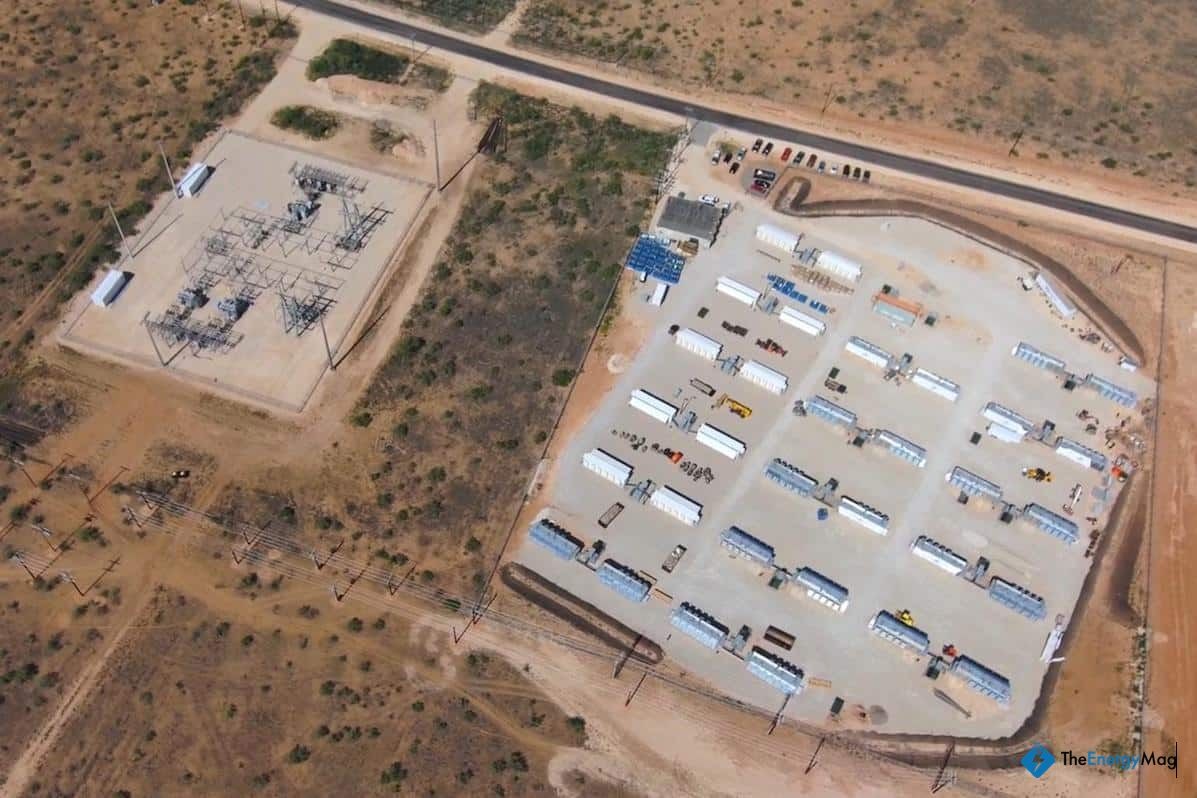
AI-generated image: synthetic visual, not an actual depiction of events, people, or locations.
Cipher Digital (NASDAQ: CIFR) said 3.2 gigawatts of proposed Texas data-center capacity has received conditional classifications under the state’s Batch Zero grid-connection process, with final designations expected in December following an audit.
The company’s clarification puts 1.1 GW in the conditional base-load category and 2.1 GW in conditional studied load. Three developments totaling 1.6 GW — Mikeska, Apollo and Stingray Phase II — also qualify for a framework allowing controllable electricity demand. Cipher disclosed the breakdown after follow-up discussions with its transmission service providers.
Colchis accounts for 1 GW of conditional base load, alongside 100 megawatts at Stingray. The studied-load category comprises Mikeska at 500 MW, Apollo at 900 MW, Stingray Phase II at 200 MW and McLennan at 500 MW.
The distinction matters for how much electricity the projects can ultimately draw. ERCOT’s framework treats base-load capacity as established for the batch study, while studied-load allocations depend on a system-wide assessment of grid capability and reliability constraints. Cipher’s classifications remain conditional.

The Provisional Controllable Load Resource framework, or PCLR, provides a route to operate ahead of full transmission buildout by making electricity consumption responsive to ERCOT’s dispatch instructions. It allows partial firm service while exposing flexible demand to curtailment, rather than guaranteeing uninterrupted access to a project’s entire requested capacity.
The classifications come as Texas scrutinizes large electricity users seeking grid connections. ERCOT notified transmission and distribution providers of conditional classifications on September 3, with requirements potentially including verification of project eligibility and correction of technical data. On September 9, it began issuing verification requests following Governor Greg Abbott’s August directive to audit data-center projects before they advance.
Cipher also distinguished the projects under review from its existing portfolio. Barber Lake, Black Pearl and Odessa are already energized, with combined capacity of 807 MW. Reveille and Ulysses, totaling 270 MW, are fully approved for interconnection, the company said.
Power availability is central to Cipher’s expansion from bitcoin mining into high-performance computing infrastructure. The company said in August that it had delivered its first data-center capacity at Black Pearl and begun collecting rent. It also disclosed an option on the 900 MW Apollo site near San Antonio, which it submitted as studied load in Batch Zero.
Cipher is pursuing on-site generation alongside grid connections. On September 3, it announced development of natural-gas lateral pipelines capable of supporting up to 2.5 GW of new generation across multiple sites, targeting power availability before the end of 2027. That figure represents potential generation supported by the pipelines, rather than operating capacity.
This article was generated with the support of our AI agent, which has been rigorously trained under the supervision of well-qualified journalists. While we strive for the highest quality in every article, if you find anything amiss, please contact us to let us know.


