CleanSpark Posts $987M Annual Loss as $6.6B AI Data Center Project Advances
AI-generated image: synthetic visual, not an actual depiction of events, people, or locations.
CleanSpark (NASDAQ: CLSK) reported a $987.1 million net loss for fiscal 2026 as declining bitcoin mining revenue and digital asset valuation losses weighed on results, even as the company advanced its transition into AI data center development with a fully financed, $6.6 billion long-term lease in Georgia.
The Las Vegas-based company said Tuesday that revenue fell 25% to $576.5 million for the fiscal year ended September 30, compared with $766.3 million a year earlier. The annual loss reversed a $364.5 million profit in fiscal 2025.
Fourth-quarter revenue declined 46% year-over-year to $120.9 million, although the company recorded a $9.8 million quarterly profit, compared with a $925,000 loss a year earlier.
The quarterly profit benefited from approximately $305.6 million in gains from changes in the fair value of bitcoin holdings and an additional $40.2 million gain associated with bitcoin collateral. Those gains were partly offset by $171.7 million in impairment charges and other expenses.

The results underscore the volatility of CleanSpark's existing mining business as the company increasingly positions itself as a developer of large-scale infrastructure for artificial intelligence and high-performance computing.
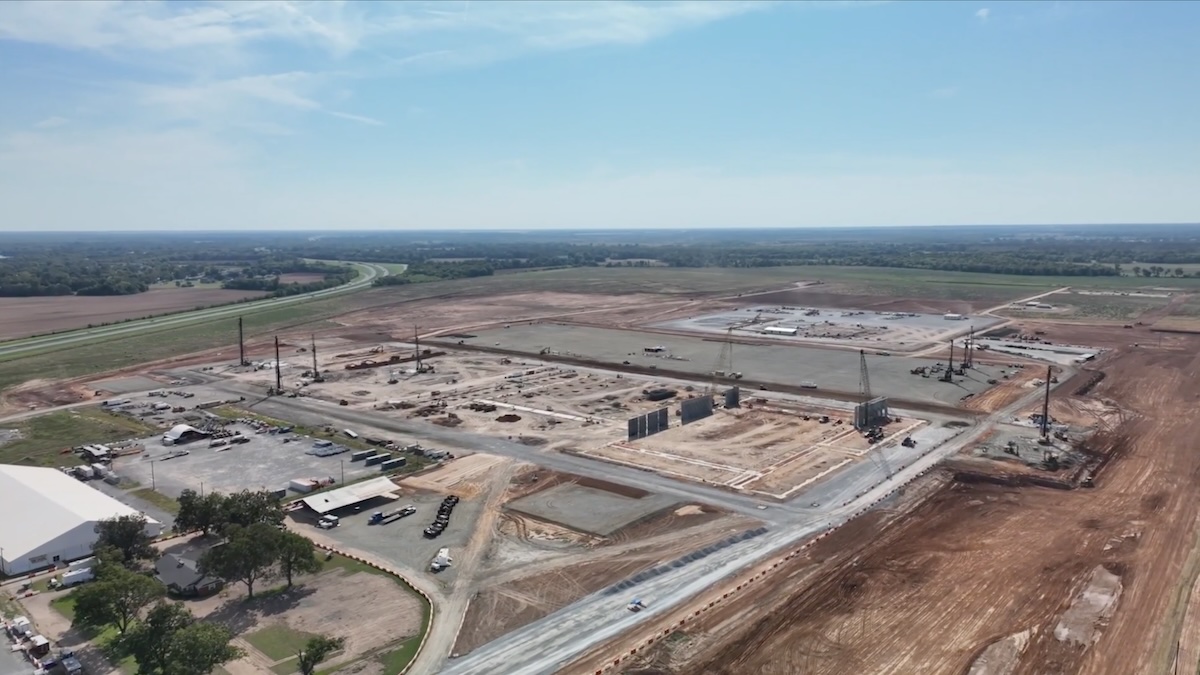
Its most significant development project, a 20-year data center lease in Sandersville, Georgia, is now fully financed and remains on schedule for its first data hall to be delivered in November 2027.
However, the company also disclosed that exclusivity arrangements covering its Texas development portfolio have expired, leaving future customer agreements for those properties unresolved.
Bitcoin Mining Revenue Falls as Valuation Losses Weigh on Earnings
CleanSpark's fiscal 2026 results reflect a difficult year for bitcoin mining economics.
The company mined 7,253 BTC during the fiscal year, an 8% decline from the previous year, while its average operating hashrate fell 21% to 36 exahashes per second (EH/s).
CleanSpark maintained 50 EH/s of operational hashrate at fiscal year-end and reported improved miner efficiency of 14.8 joules per terahash, compared with 16.7 J/TH a year earlier.
Despite those efficiency improvements, annual mining revenue declined by approximately $190 million.
The company also recorded $281.6 million in net losses from changes in the fair value of bitcoin holdings and $118.7 million in losses associated with bitcoin collateral during the fiscal year.
Combined, those valuation effects amounted to approximately $400.4 million in losses.
Additional expenses included $428.2 million in depreciation and amortization and $177.1 million in impairment charges.
For the full fiscal year, CleanSpark reported an adjusted EBITDA loss of $304.2 million, compared with positive adjusted EBITDA of $823.4 million in fiscal 2025.
Its fourth-quarter adjusted EBITDA, however, reached $345.4 million.
Importantly, CleanSpark's definition of adjusted EBITDA does not exclude gains and losses from changes in the fair value of bitcoin and bitcoin collateral. Consequently, the fourth-quarter figure benefited from substantial non-cash valuation gains and should not be interpreted as cash earnings generated by mining operations.
The company has increasingly emphasized monetizing its electricity and data center assets through long-term infrastructure leases, which offer a potentially less volatile revenue model than bitcoin mining.
$6.6 Billion Meta Lease Fully Financed, First Data Hall Targeted for November 2027
The centerpiece of CleanSpark's AI infrastructure strategy is its Sandersville campus in Georgia.
The company reiterated that construction remains on time and within budget for the development, which is supported by a 20-year triple-net lease expected to generate approximately $6.6 billion in contracted revenue.
As TheEnergyMag previously reported, the tenant is Meta Platforms, through its subsidiary Anviran. The agreement covers approximately 175 MW of critical IT capacity, with Meta providing credit support for the lease obligations.
The project represents a significant commercial milestone in CleanSpark's transition from bitcoin mining to AI data center development.
Under a triple-net lease, the tenant generally assumes responsibility for property operating expenses, including maintenance, taxes and insurance, while CleanSpark provides the underlying data center infrastructure.
CleanSpark completed a $2.276 billion senior secured notes offering in September, with the debt carrying a 7.875% annual interest rate and maturing in 2031.
The company said the financing fully funds the planned Sandersville development.
To reduce construction and cost risks, CleanSpark has aligned the project's design requirements, entered into a turnkey lump-sum development contract and prepaid for long-lead equipment.
It also reported receiving all material building and development permits.
The first data hall remains scheduled for delivery in November 2027.
Although the lease provides long-term contracted revenue visibility, the $6.6 billion represents expected payments over two decades, not revenue already recognized or collected.
The project must still be completed and delivered in accordance with contractual requirements before the anticipated rental income can be realized.
Texas Exclusivity Expires as ERCOT Advances Power Classifications
CleanSpark's Texas development pipeline presents a less certain picture.
The company acquired properties in Sealy and Brazoria during fiscal 2026, representing up to 885 MW of potential electrical capacity for AI and HPC development.
The portfolio includes 285 MW at Sealy and up to 600 MW at Brazoria.
In July, CleanSpark announced its Sandersville lease alongside a letter of intent and exclusivity arrangement covering its Texas properties with the same prospective customer.
However, Tuesday's earnings release disclosed that the exclusivity period at both Sealy and Brazoria expired during a period of temporary regulatory uncertainty.
CleanSpark said it continues commercialization discussions with its existing Sandersville tenant and other prospective customers.
The company has not announced a definitive lease for either Texas project.
On the regulatory front, CleanSpark reported conditional ERCOT Batch Zero Baseload designations covering 585 MW, comprising 285 MW at Sealy and 300 MW at Brazoria's first phase.
Brazoria's second phase, involving up to another 300 MW, received a conditional Studied Load designation.
These classifications represent progress in ERCOT's large-load review process but do not amount to unconditional approval for the full amount of electricity requested or guarantee future energization.
CleanSpark also received environmental permits from the Texas Commission on Environmental Quality for Brazoria.
The regulatory progress strengthens the prospects for future development, but the absence of definitive customer commitments means the Texas sites remain potential projects rather than contracted revenue-generating assets.
Georgia Expansion Offers Another Potential 500 MW
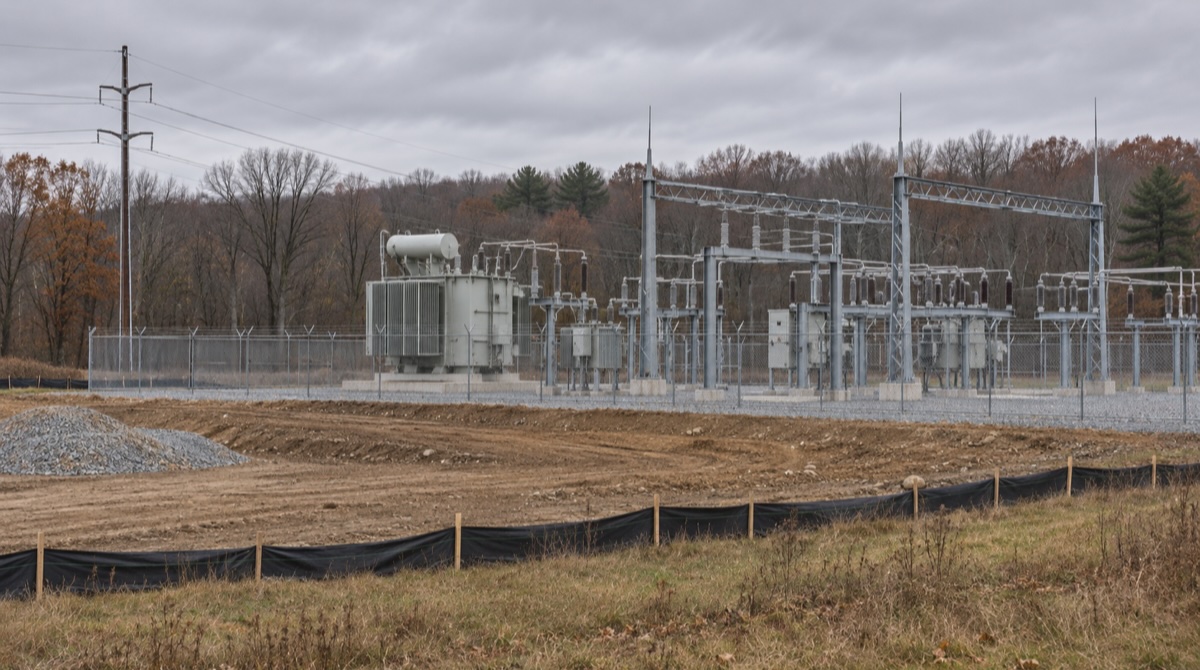
CleanSpark also outlined additional development opportunities at its Washington, Georgia, campus.
The site currently has 86 MW of energized, grid-connected capacity.
The company has submitted a transmission study aimed at increasing available power to 500 MW, with preliminary results suggesting that level could be supported over the coming years.
CleanSpark also acquired approximately 500 acres of adjacent land to facilitate future AI data center development.
However, the proposed expansion remains subject to further transmission studies, utility approvals and infrastructure development.
The potential 500 MW should therefore be distinguished from the site's existing 86 MW of energized capacity.
Together with Sandersville and the Texas portfolio, the project illustrates CleanSpark's strategy of using existing electricity infrastructure, land holdings and development expertise to attract long-term AI and HPC customers.
$1.3 Billion in Liquidity, but Debt Rises Sharply
CleanSpark ended fiscal 2026 with approximately $1.3 billion in combined cash and bitcoin holdings.
That figure included $204.8 million in cash and cash equivalents and approximately $1.13 billion in bitcoin holdings, including current and non-current holdings and assets pledged as collateral.
The company held 13,530 BTC at September 30.
While the combined balance provides substantial potential liquidity, it is not equivalent to holding $1.3 billion in unrestricted cash. The value of the bitcoin portfolio fluctuates with market prices, and certain holdings are encumbered.
CleanSpark's balance sheet also reflects the financing requirements of its infrastructure transition.
Total debt, including current and long-term portions, reached approximately $4.08 billion at fiscal year-end, compared with roughly $821 million a year earlier.
The increase reflects a substantially more leveraged capital structure as the company finances its data center development program.
CleanSpark's Sandersville notes provide dedicated project funding, but the debt carries ongoing interest obligations and creates additional financial commitments before the full anticipated lease payments begin.
President and Chief Financial Officer Gary Vecchiarelli said the company intends to preserve financial flexibility and allocate capital toward projects offering attractive risk-adjusted returns.
The balance between bitcoin treasury management, development spending and debt obligations will become increasingly important as CleanSpark pursues additional projects.
From Mining Revenue to Long-Term Infrastructure Leases
CleanSpark's results highlight the contrast between its established bitcoin mining operation and its emerging data center development business.
The company generated $576.5 million in annual revenue from mining, but reported a nearly $1 billion net loss amid digital asset valuation changes, depreciation and impairment charges.
Meanwhile, Sandersville offers a potential long-term revenue stream supported by an investment-grade technology company, although the project is not scheduled to begin delivering its first data hall until late 2027.
The Texas and Washington developments offer additional opportunities, but their commercial value remains dependent on securing customers, completing regulatory processes and financing construction.
For investors, the next milestones will be the delivery of Sandersville on schedule, the conversion of Texas customer discussions into definitive leases and the successful expansion of grid-connected capacity.
The company's transformation will ultimately be measured not by the amount of potential power capacity in its portfolio, but by how much of that capacity can be converted into operational, contracted infrastructure generating sustainable cash returns.