Nvidia Backs MediaTek With $3.5B in Expanded AI Chip Pact
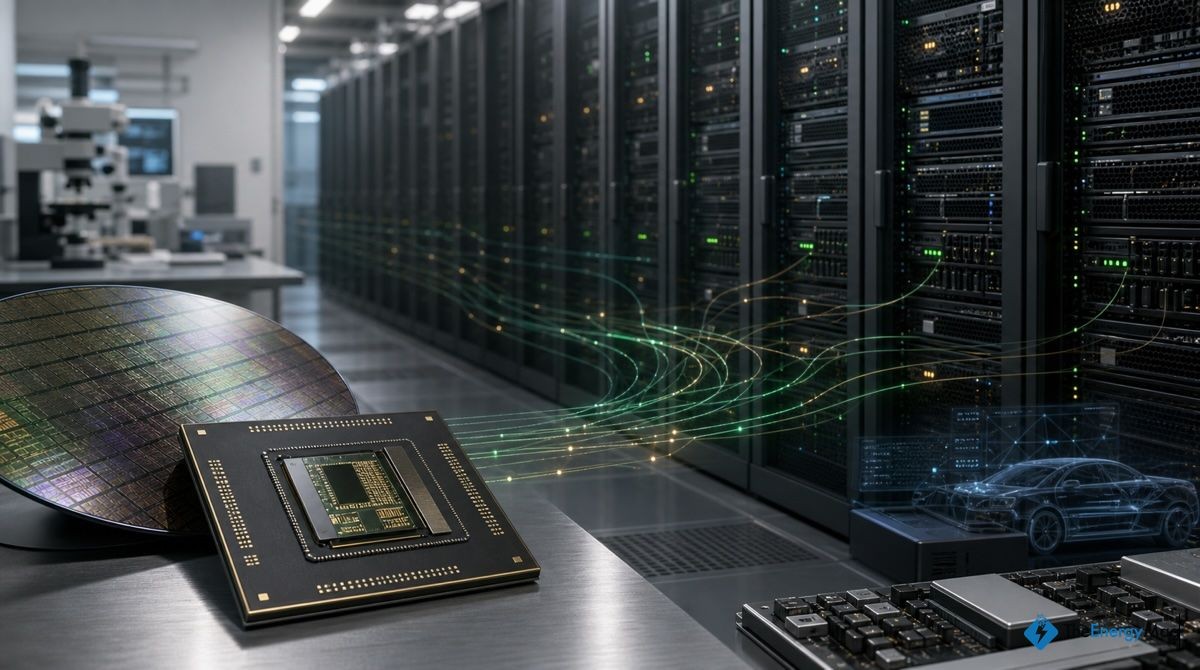
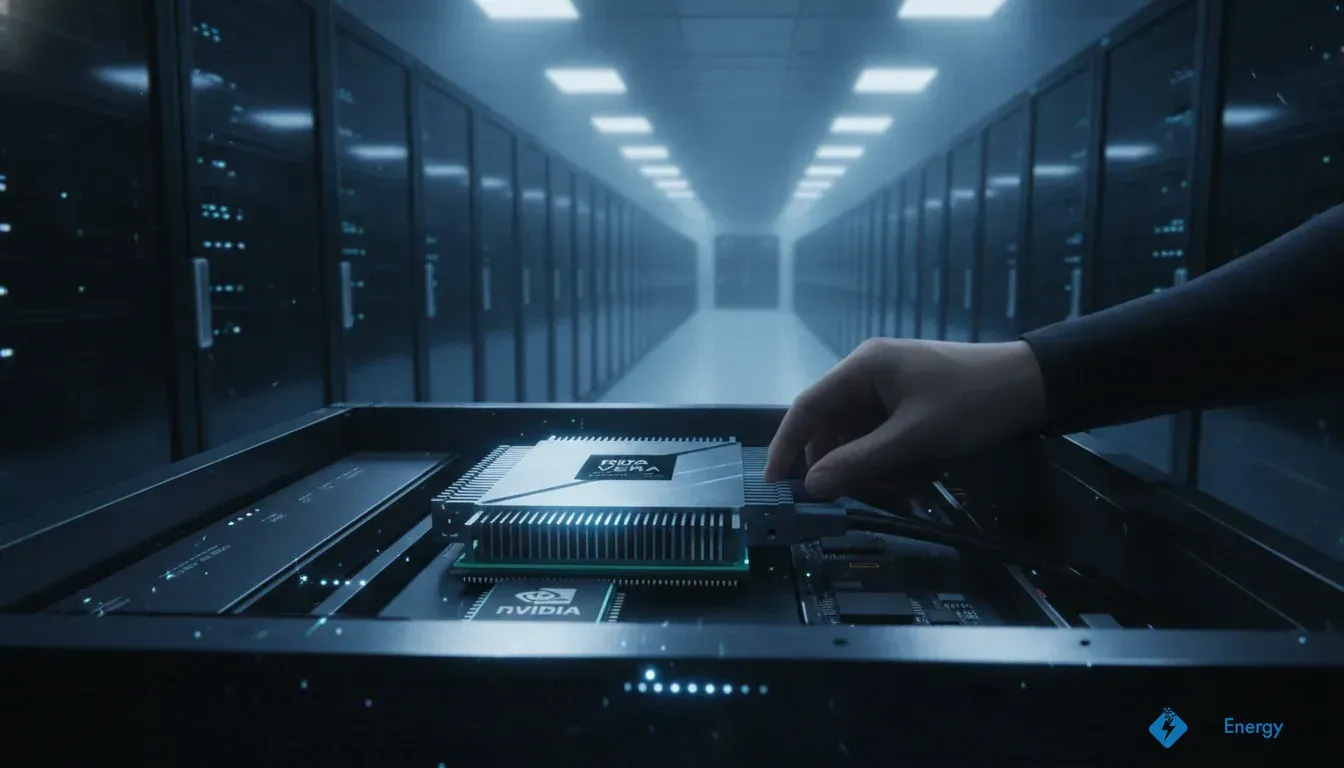
AI-generated image: synthetic visual, not an actual depiction of events, people, or locations.
Key Takeaways
- NVIDIA invested $3.5 billion in MediaTek convertible bonds to support the development of next-generation AI infrastructure and edge computing.
- MediaTek will utilize the NVLink Fusion platform to enable customers to build custom XPUs compatible with NVIDIA’s rack-scale AI factories and MGX architecture.
Nvidia has invested $3.5 billion in convertible bonds issued by MediaTek Inc. as the chipmakers expanded their partnership across data center infrastructure, personal computers and vehicles.
MediaTek will adopt Nvidia’s NVLink Fusion platform, allowing cloud providers and AI developers to connect custom accelerators — known as XPUs — with Nvidia’s rack-scale systems, the companies said in a statement on Monday.
The investment adds a financial tie to a relationship that already spans several computing markets. It also gives Nvidia another route to keep its interconnect and software technology at the center of AI data centers as large cloud operators increasingly develop their own processors.
The companies didn’t disclose the bonds’ interest rate, maturity, conversion price or other terms. They also didn’t say when the securities were issued, how MediaTek would use the proceeds or the potential ownership stake Nvidia could receive upon conversion. Those omissions make it difficult to assess the transaction’s eventual dilution or valuation implications for MediaTek shareholders.
Under the expanded agreement, MediaTek customers will be able to tailor connectivity, memory, packaging, performance and power characteristics for their workloads. Nvidia and MediaTek will provide supporting technology including chip-to-chip connections, high-bandwidth memory architecture and advanced packaging.
Nvidia introduced NVLink Fusion in 2025 as a way for companies developing custom processors to use its networking technology and connect those chips with Nvidia CPUs and GPUs. MediaTek was among the initial partners supporting the platform, alongside custom-chip specialists including Marvell Technology Inc. and Alchip Technologies Ltd. Nvidia said at the time that the system was intended to help customers build semi-custom AI infrastructure without designing every surrounding component themselves.
The strategy addresses a shift among hyperscalers and frontier-model developers toward specialized accelerators optimized for particular AI workloads. Those processors can reduce power consumption and cost, but still require high-speed links, memory and networking to operate in large clusters. Nvidia’s approach lets customers customize the compute engine while retaining more of its surrounding infrastructure.
The companies will also jointly develop multiple generations of chips for Nvidia’s RTX Spark consumer computers and DGX Spark developer and enterprise systems. Their earlier work produced the GB10 Grace Blackwell Superchip, which combines a Blackwell graphics processor with an Arm-based CPU and 128 gigabytes of unified memory. DGX Spark systems began shipping in October 2025 and can run large AI models locally rather than relying entirely on cloud infrastructure, according to MediaTek.
In automobiles, the companies plan to continue developing MediaTek’s Dimensity Auto platforms, which integrate Nvidia graphics and AI technology for vehicle cockpits and can operate alongside Nvidia’s Drive AGX systems. Their automotive collaboration was first announced in 2023.
The agreement broadens MediaTek’s exposure beyond its established smartphone, television and connectivity-chip businesses. The Taiwanese company has been building its custom-silicon capabilities to compete for data-center accelerator work, a market also targeted by Broadcom Inc., Marvell and other chip designers.
For Nvidia, the investment follows rapid growth in its core AI infrastructure business. The company reported fiscal second-quarter revenue of $96.2 billion, more than double the year-earlier level, while data-center revenue rose 117% to $89 billion. Nvidia forecast third-quarter sales of about $108 billion. The results covered the quarter ended July 26.
This article was generated with the support of our AI agent, which has been rigorously trained under the supervision of well-qualified journalists. While we strive for the highest quality in every article, if you find anything amiss, please contact us to let us know.