TeraWulf’s AI Leasing Revenue Reaches 71% as Data Center Shift Accelerates
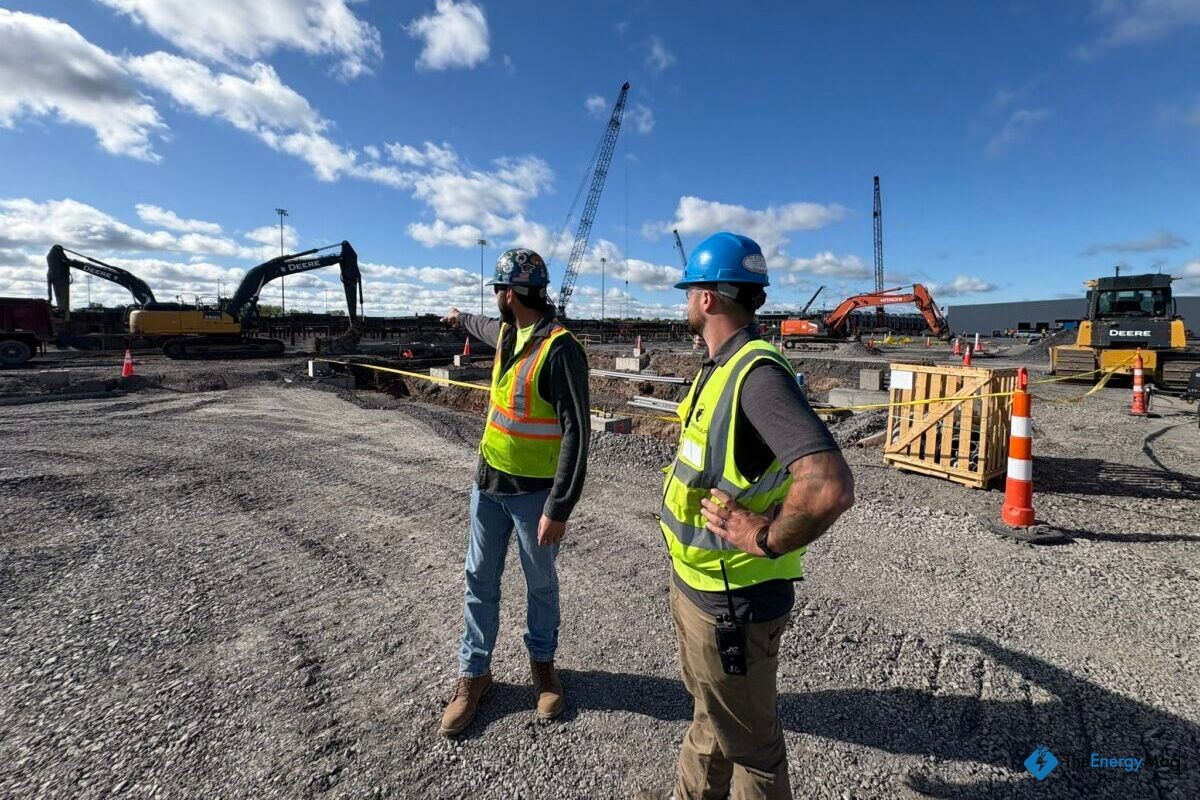
AI-generated image: synthetic visual, not an actual depiction of events, people, or locations.
TeraWulf (NASDAQ: WULF)’s high-performance-computing leasing business supplied most of its revenue for the first time in the second quarter, marking a turning point in the former bitcoin miner’s effort to recast itself as an AI data-center operator.
Revenue was $44.8 million in the three months through June, including $31.9 million from HPC leases, TeraWulf said Wednesday in its earnings release. Leasing accounted for about 71% of the total.
Overall revenue declined about 6% from $47.6 million a year earlier, when the company was still more heavily dependent on bitcoin production. It increased about 32% from the first quarter of 2026, while HPC lease revenue rose roughly 52% sequentially from $21 million. TeraWulf began recognizing HPC leasing revenue in July 2025. Its first-quarter filing showed 60 megawatts of energized HPC capacity at March 31.
The changing revenue mix reflects a broader shift among bitcoin miners toward hosting artificial-intelligence computing. These companies are seeking to capitalize on their access to power, land and grid connections as technology companies compete for data-center capacity. Long-term leases can produce more predictable revenue than bitcoin mining, though they also require billions of dollars of construction spending and expose operators to delivery deadlines and financing risk.

TeraWulf operated 81 megawatts of revenue-generating critical IT capacity at its Lake Mariner campus in New York at the end of June. The completion of its CB-3 building in early July lifted that figure to 102 megawatts and satisfied conditions for $600 million of Google credit support for Fluidstack’s lease obligations to take effect, the company said.
An additional 336 megawatts is under construction in the CB-4 and CB-5 buildings. The first CB-4 data hall has entered commissioning, with delivery and rent commencement planned in phases during the second half of 2026. CB-5 is scheduled to begin phased delivery in early 2027.
TeraWulf said the developments remain within its earlier estimate of $8 million to $10 million of construction cost for each megawatt of critical IT capacity. Its regulatory filings warn that customer backstops such as Google’s support generally become effective only after the relevant lease commences, making on-time completion important to both financing and revenue recognition. Delays beyond specified thresholds may give customers termination rights. The company described those risks in its 2025 annual report.
TeraWulf ended June with about $3 billion of cash and restricted cash, compared with approximately $3.1 billion three months earlier. Restricted cash may be designated for specific projects or obligations and is not necessarily available for general corporate spending.
The company’s expansion accelerated after the quarter ended. In July, it signed a 20-year lease with AI developer Anthropic covering about 401 megawatts at the Justified Data Campus in Hawesville, Kentucky. TeraWulf estimates the agreement will generate about $19 billion of revenue during its initial term and as much as $33 billion if Anthropic exercises two five-year extensions.
Initial capacity at Justified is expected in the second half of 2027, with the full campus scheduled for delivery in early 2028. The base term averages about $950 million of contracted revenue annually, although actual revenue will depend on the delivery schedule and lease terms. An SEC filing confirms the lease’s duration, capacity and planned construction phases.
TeraWulf also agreed to sell its entire 50.1% interest in the Abernathy data-center joint venture in Texas for about $530 million in cash. The buyer group is led by Fluidstack, TeraWulf’s partner in the project. The proceeds would allow TeraWulf to redirect capital toward campuses where it has full control, including the Kentucky developments.
At its Muskie campus in eastern Kentucky, acquired in May, electric-service and infrastructure agreements with Kentucky Power provide for as much as one gigawatt of power. Initial service is expected in the fourth quarter of 2028.
The company is pursuing another potential gigawatt-scale campus at the Morgantown generating station in Maryland. The Federal Energy Regulatory Commission authorized the proposed acquisition on July 29, according to TeraWulf. The transaction still requires remaining conditions and approvals, and initial data-center operations are not contemplated until 2030.
TeraWulf reaffirmed its goal of contracting an additional 250 to 500 megawatts of critical IT capacity each year. Meeting that target will depend on securing power, tenants and financing while delivering its existing construction pipeline on schedule.