The company now needs to secure only another 16.5 MW to reach its stated capacity target, although much of the infrastructure remains under development and has yet to generate revenue.
A103 Builds on Existing Cyberjaya Infrastructure
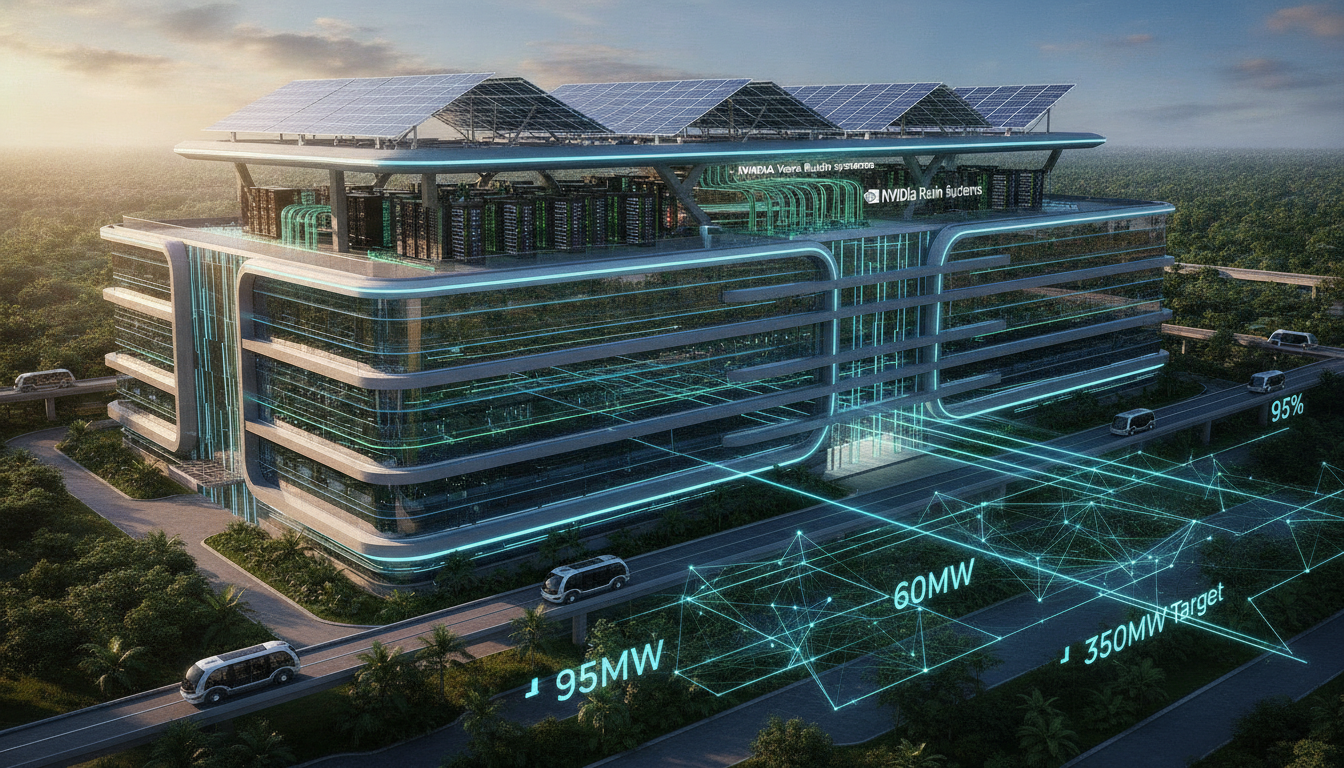
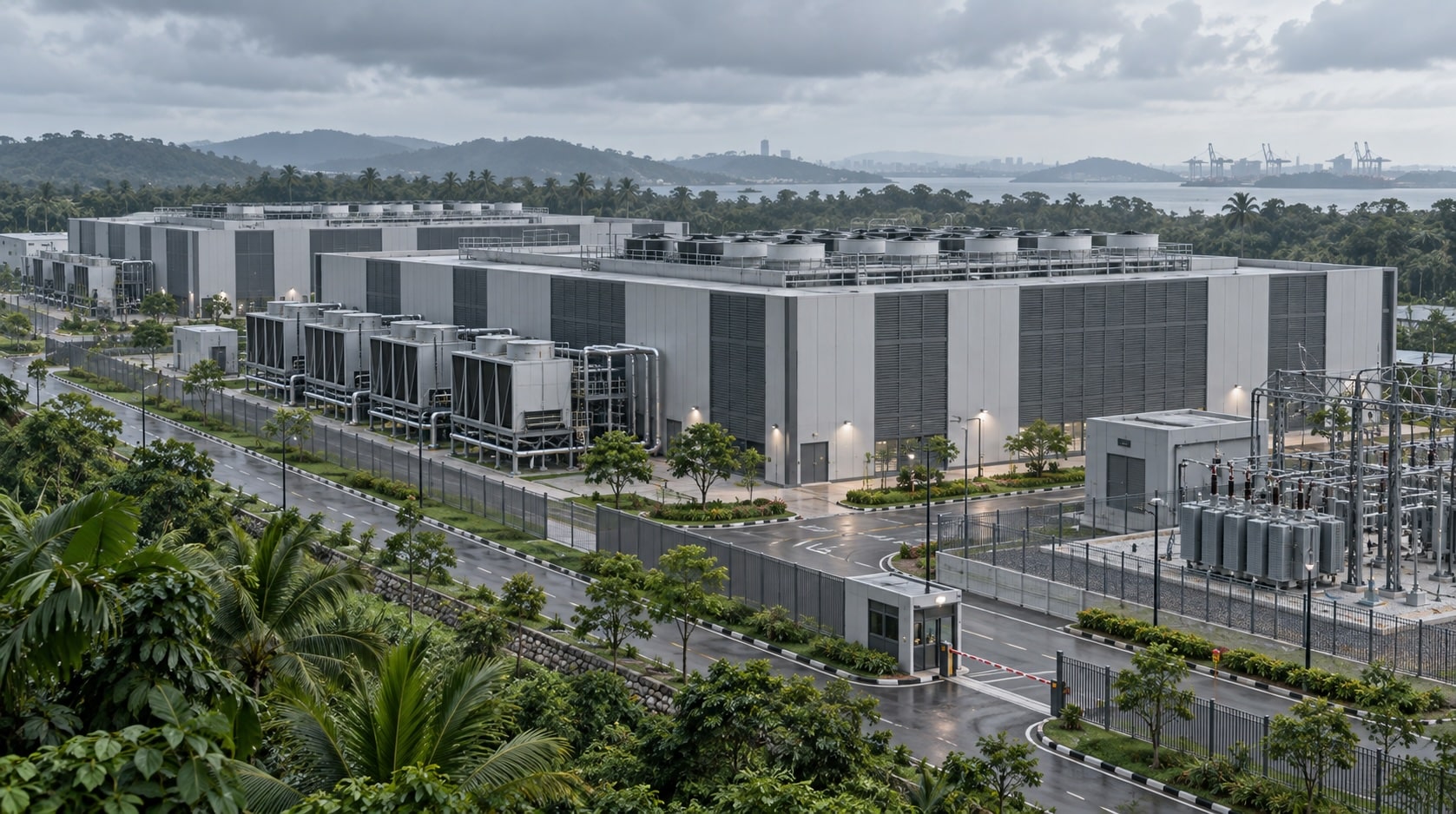
The new A103 facility will sit alongside Bitdeer's A101 and A102 facilities at Cyberjaya, bringing the campus's planned AI Cloud capacity to approximately 71.5 MW of critical IT load.
By developing A103 at an established location, Bitdeer expects to leverage existing electrical, liquid-cooling and networking infrastructure to accelerate deployment.
"Adding 60MW alongside the A101 and A102 facilities means we benefit from the power, the cooling and the network infrastructure already in place, improving our time-to-market," said Michael G. Potter, Bitdeer's chief financial officer.
Potter added that the facility is being designed for NVIDIA's Vera Rubin generation, reflecting customer inquiries about capacity availability in 2028.
NVIDIA's Vera Rubin architecture integrates advanced GPUs, CPUs, high-speed networking and direct liquid cooling in rack-scale computing systems. Its substantial power and cooling requirements make the availability of suitable data center infrastructure a critical consideration for cloud providers.
Bitdeer did not disclose the financial terms of the A103 agreement, the identity of its data center services counterparty or the project's anticipated capital expenditure.
Two Malaysian Deals Bring Bitdeer Close to 350MW Target
Monday's announcement follows an unusual sequence of disclosures last week.
On October 8, Bitdeer initially announced the A103 project but subsequently instructed journalists and other recipients to disregard that release. Later the same day, the company announced a separate 67 MW A901 campus under a 10-year agreement, bringing its secured AI Cloud capacity to 273.5 MW.
Monday's announcement formally confirms A103 as an additional project, raising the combined total to 333.5 MW.
The two facilities have different hardware configurations and delivery schedules.
A901, which will establish a third Malaysian hub alongside Cyberjaya and Johor, is designed for NVIDIA GB300 NVL72 systems. Capacity delivery is targeted to begin in the first quarter of 2027, with the full 67 MW expected in the second quarter.
A103, meanwhile, will support newer-generation Vera Rubin systems and is expected to be energized in early 2028.
Bitdeer is also expanding its Johor campus, where it previously secured a 65.1 MW A202 facility alongside its 21.7 MW A201 development.
The rapid accumulation of infrastructure commitments highlights the company's strategy of securing AI-ready capacity ahead of anticipated GPU computing demand.
$10 Billion Sales Pipeline, but No A103 Customer Contracts Yet
Bitdeer reiterated Monday that its active pipeline of potential AI Cloud contracts exceeds $10 billion.
The figure represents management's estimate of potential contract value from ongoing commercial discussions, rather than signed customer agreements or recognized revenue.
In September, Bitdeer announced customer offtake commitments covering more than 70% of its A201 facility, representing more than $1.7 billion in expected revenue over five years.
Its smaller A102 facility at Cyberjaya is also fully committed under five-year customer agreements representing more than $800 million in expected revenue.
Together with other agreements, Bitdeer reported approximately $2.9 billion in expected AI Cloud revenue backlog at the end of September.
However, the newly announced A103 facility has no executed customer offtake commitments as of October 12, according to the company.
That distinction is central to evaluating Bitdeer's expansion. Its 333.5 MW figure represents data center capacity owned or secured through executed services agreements, not fully energized computing infrastructure or capacity already contracted to paying GPU cloud customers.
Turning that portfolio into recurring revenue will require customer contracting, GPU procurement, financing and timely delivery of the facilities.
Bitdeer's AI Transformation Accelerates
The Malaysia expansion is part of Bitdeer's broader effort to diversify beyond bitcoin mining into AI infrastructure and GPU cloud services.
The company is pursuing two business models: operating its own GPU cloud platform and providing high-density data center infrastructure to third-party tenants.
In August, Bitdeer announced a separate 16-year colocation agreement at its Tydal campus in Norway covering 121 MW of critical IT capacity, with approximately $4.7 billion in scheduled payments over the initial term.
Unlike AI Cloud deployments, where Bitdeer provides GPU computing services directly to customers, the Norway agreement centers on leasing data center capacity.
The distinction is relevant to the economics of the company's transformation. GPU cloud expansion can require substantial upfront spending on accelerators and related infrastructure, while long-term colocation agreements can provide contracted revenue streams tied to facility availability.
Bitdeer's AI Cloud business generated approximately $14 million in second-quarter revenue, compared with $1.3 million a year earlier, but recorded a gross loss of $2.3 million.
With approximately 95% of its target capacity now secured, the next phase of the company's AI Cloud strategy will depend less on announcing additional megawatts and more on converting those infrastructure commitments into operational GPU capacity and paying customers.