Braiins, Enel Launch Energy Tool as Bitcoin Mining Margins Tighten
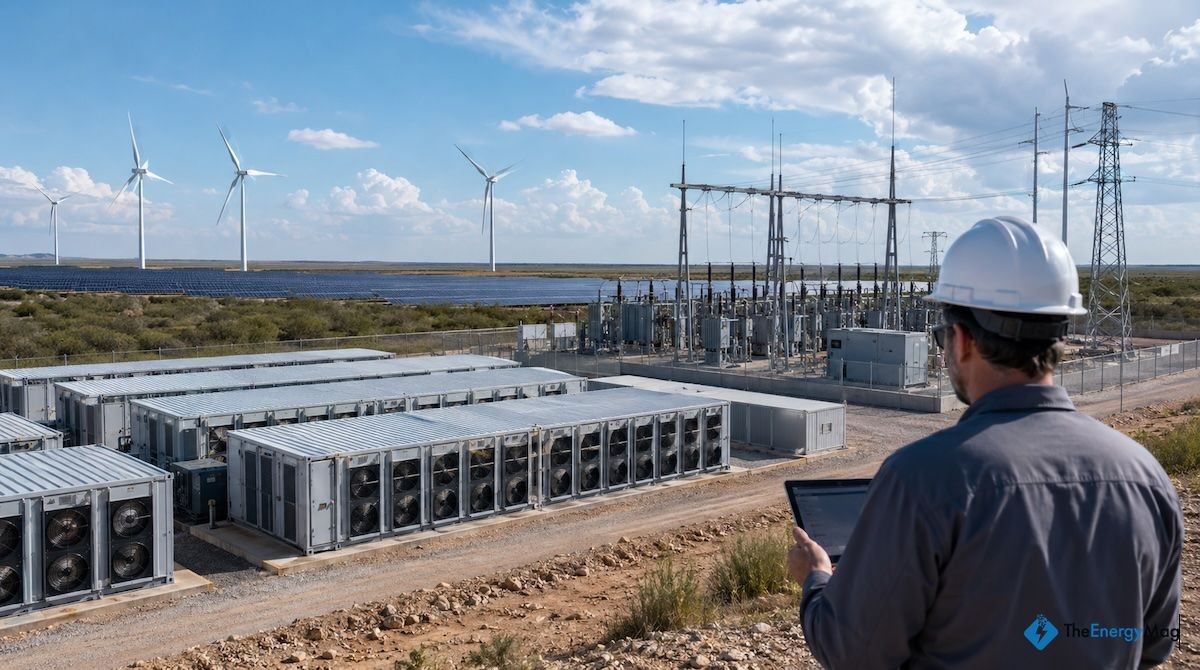
AI-generated image: synthetic visual, not an actual depiction of events, people, or locations.
Braiins and Enel North America have launched a software-based energy management service for bitcoin miners, adding to an industry push to extract more revenue from existing fleets as depressed hashprice leaves operators with little room for inefficiency.
The service, called Mining Energy Intelligence, combines Braiins’ miner-management software with Enel’s access to electricity demand-response markets. It is initially available to mining facilities in the PJM and ERCOT power markets, the companies said on Thursday.
Rather than simply switching an entire mining site on or off, the system is designed to assess electricity prices, grid conditions and mining economics before adjusting power consumption across a fleet. Enel will aggregate participating mining capacity and manage its entry into demand-response and ancillary-services programs, while Braiins’ software will execute curtailments at the facility level.
Participating miners can be compensated for reducing consumption when power grids are under stress or electricity demand is elevated. The software can also curtail machines ahead of wholesale price spikes or forecast system peaks that may determine transmission charges.

The commercial model uses fixed software-as-a-service pricing rather than taking a share of the savings or demand-response revenue, according to the companies. Braiins estimated that the combination of peak avoidance and grid-service revenue could produce an annual impact of between $86,000 and $166,000 per megawatt, based on historical ERCOT data. Actual results would depend on location, electricity contracts, machine efficiency and market conditions.
The partnership reflects a broader change in how bitcoin mining operators are approaching profitability. For much of the sector’s history, growth largely meant securing cheaper power and installing more machines. With revenue per unit of computing power now near historic lows, operators are placing greater emphasis on software that determines when individual machines should run, at what power level and under which market conditions.
Bitcoin hashprice stood at about $31 per petahash per second per day on July 16, according to Hashrate Index. At those levels, small differences in machine efficiency, uptime and curtailment execution can have a material effect on margins.
Mining companies have used demand response and price-based curtailment for years, particularly in Texas. The newer generation of products is attempting to automate those decisions at a more granular level and connect them directly with power-market data.
Luxor Technology has executed a similar strategy. The company launched an energy business in October that integrates demand response, ancillary services and peak avoidance with its LuxOS firmware. Luxor said its “Intelligent Mining” system continuously adjusts machine performance using power prices and hashprice data, rather than relying on conventional binary curtailment.
Luxor expanded that approach in April with Commander, a fleet-management platform connecting miner controls with its pool, firmware, energy and derivatives services. Its optimization algorithm evaluates hashrate and electricity-market conditions every five minutes and adjusts machine power settings based on fleet composition, hashprice and energy costs. Luxor said internal tests showed an 8% to 14% profitability improvement over strategies that only switch machines fully on or off.
Braiins and Enel are dividing those functions between a mining-software provider and an established electricity-market participant. Enel said it aggregates more than 4.8 gigawatts of demand-response capacity across over 11,400 sites in the U.S. and Canada, while more than 3 gigawatts of mining equipment runs on the Braiins software suite.
Under the partnership, Enel will handle market enrollment, bidding, event dispatch and payment settlement. Braiins Manager will receive Enel’s signals, monitor wholesale prices, curtail machines when operating becomes uneconomic and restart them when conditions improve.
The initial focus on ERCOT and PJM places the service in two of the largest U.S. power markets and two regions facing rapidly expanding demand from data centers and other large loads. Mining facilities can respond more quickly than most industrial users because their computing equipment can reduce power consumption without interrupting an essential service or a continuous manufacturing process.