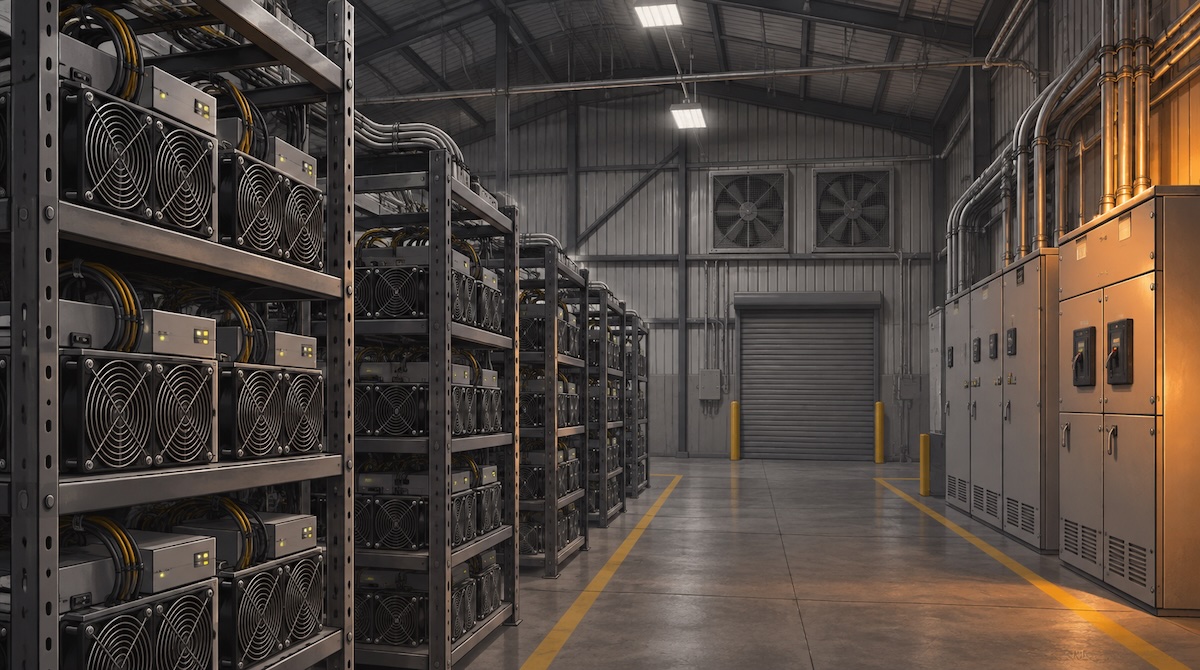
Mining firmware provides an established example of that trade-off. Braiins, a supplier of bitcoin mining software, describes autotuning that calibrates individual chips’ frequencies and voltages to improve efficiency at a chosen power target.
Sherman Ikemoto, Group Director of Cadence, which supplies chip design and data center simulation software, described a similar optimization problem for AI facilities.
Operators need to understand how much electricity is required to produce computing output and how that production translates into revenue, he said in a recent interview with TheEnergyMag. With power availability constraining expansion, efficiency becomes central to both facility design and operation.
“There’s a lot of money at stake,” Ikemoto said. “And so you can’t waste power.”
The mining comparison concerns the underlying power-performance calculation. AI workloads introduce additional variables: token throughput depends on the model, hardware and operating configuration, while customers may also require particular response times and service quality. A throughput gain must therefore be assessed against the work being performed.
Ikemoto described how performance gains from graphics processing units, or GPUs, can diminish as their power consumption approaches its maximum. Depending on the processor, reducing its power setting can sacrifice relatively little individual-chip performance while freeing electricity for additional GPUs.
He contrasted maximum-power operation, known as Max-P, with Max-Q, which targets greater performance per watt. NVIDIA’s documentation similarly distinguishes its highest GPU power setting from the setting intended to deliver the best application performance per watt.
In an illustrative example, Ikemoto described operating GPUs at 80% of maximum power, while emphasizing that the appropriate setting depends on the hardware.
The potential gain comes from accommodating more processors within the same electricity allocation. Each may produce less than it would at maximum power, but their combined output can be greater.
“And within the same power envelope, we can now generate a lot more tokens,” he said.
That logic will be familiar to mining operators balancing machine efficiency against the electrical capacity of a site. For AI developers, the constraint also begins with whether a proposed power allocation is actually available for use.
“Many sites are marketed on headline megawatts, but the service agreement often shows that much of that capacity is interruptible or depends on a future upgrade,” said Dipan Patel, chief operating officer of Duos Technologies Group, which develops and operates modular edge data centers.
“AI customers need firm power on a committed date,” he told TheEnergyMag.
Patel said utility studies and infrastructure upgrades can push energization out by several years. Improving output from existing electricity capacity addresses a different part of the problem from waiting for additional utility service.
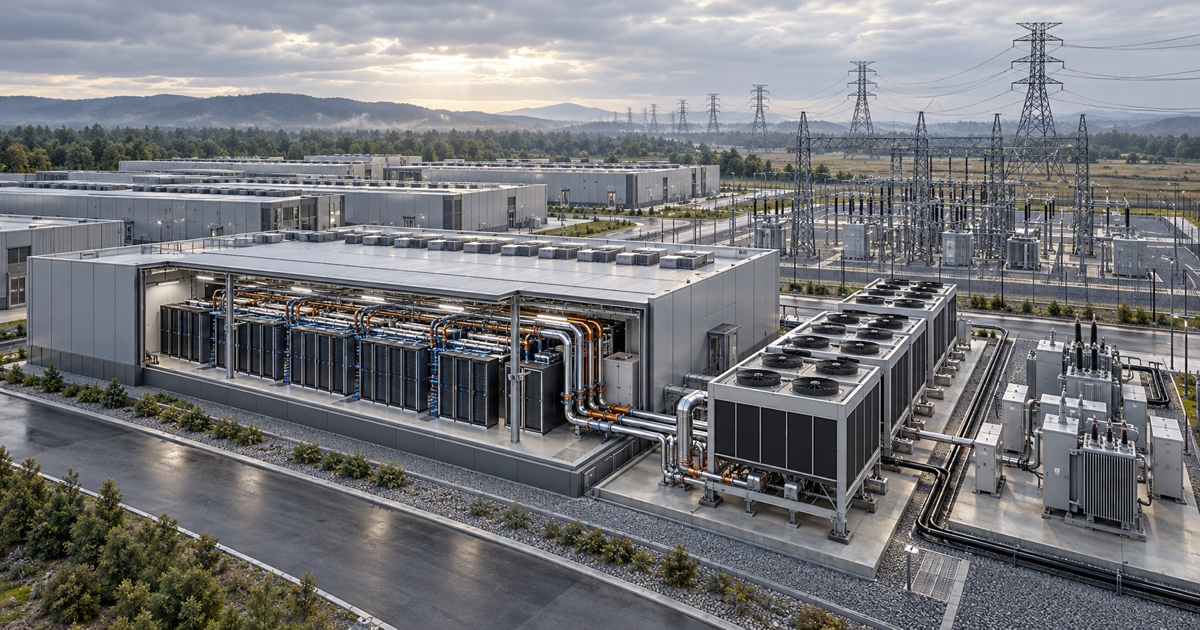
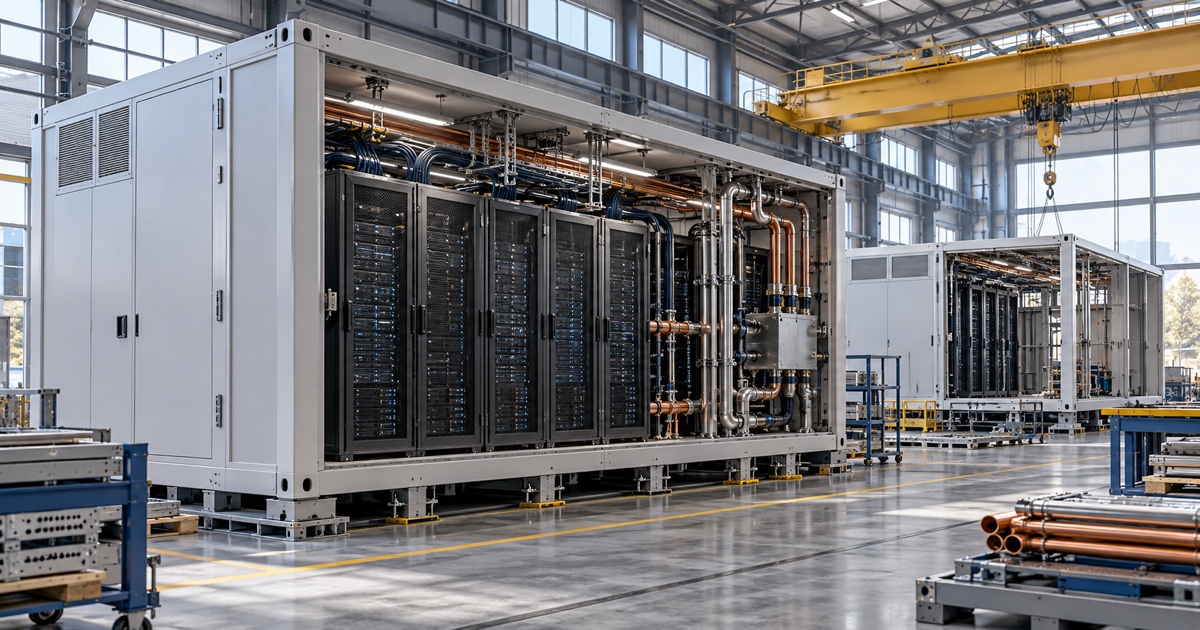
For Ikemoto, capturing those gains requires coordination across the chip-to-chiller chain: the processors, servers, electrical distribution and cooling equipment that together determine how the facility operates.
Adding GPUs within an existing power allocation still requires space, cooling and suitable electrical infrastructure. A change in chip settings therefore needs to be considered alongside the physical systems supporting the equipment.
Cadence uses digital twins—virtual models of physical facilities—to examine those interactions before equipment is installed or operating configurations are changed.
Ikemoto described simulations that identify areas receiving inadequate cooling or power, then allow engineers to adjust equipment layouts, control systems and GPU settings. The objective is to find configurations that increase computing output within the facility’s constraints.
He likened an AI facility to a manufacturing plant whose business depends on the efficiency and uptime of its production line.
The financial calculation remains important. Additional GPUs require capital even when the installation stays within an existing electricity allocation. Greater throughput must generate enough value to justify the processors and supporting infrastructure.
Ikemoto argued that improved efficiency and additional processors can increase profitability. The interview did not establish a payback calculation for a specific deployment.
The simulations have their own dependencies. Asked about the difficulties that remain, Ikemoto identified maintaining Cadence’s library of equipment models and obtaining the detailed specifications needed from manufacturers.
That makes accurate hardware data part of the efficiency calculation. Engineers need models that represent the equipment they intend to install before they can meaningfully test how the entire facility will behave.
The parallel with mining is ultimately a question of production economics: how much useful work can a fixed electricity supply support, and what does it cost to obtain that output?
Mining firmware addresses that question through the operating settings of hashing machines. Ikemoto’s account extends the AI calculation from individual GPU settings to the design and operation of the whole facility. The available megawatts establish the limit; the equipment and its configuration determine what can be produced within it.