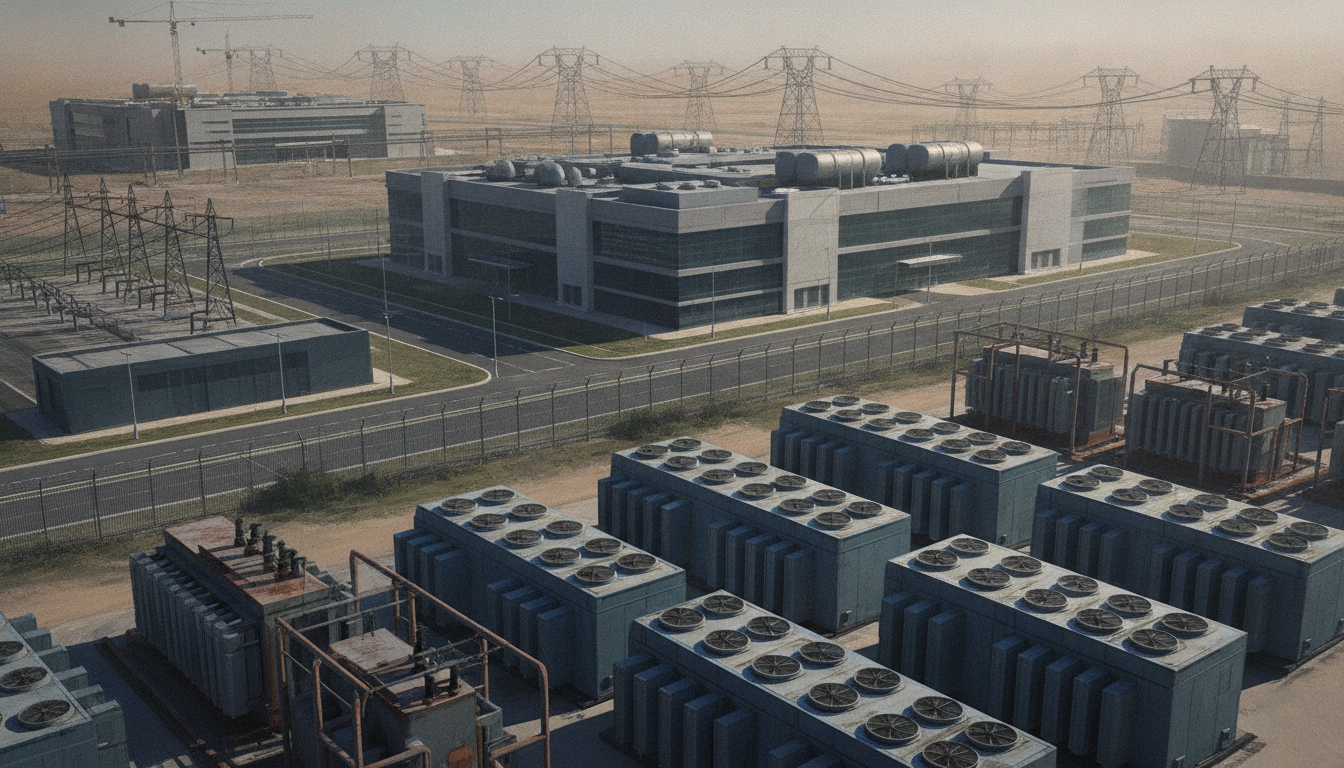
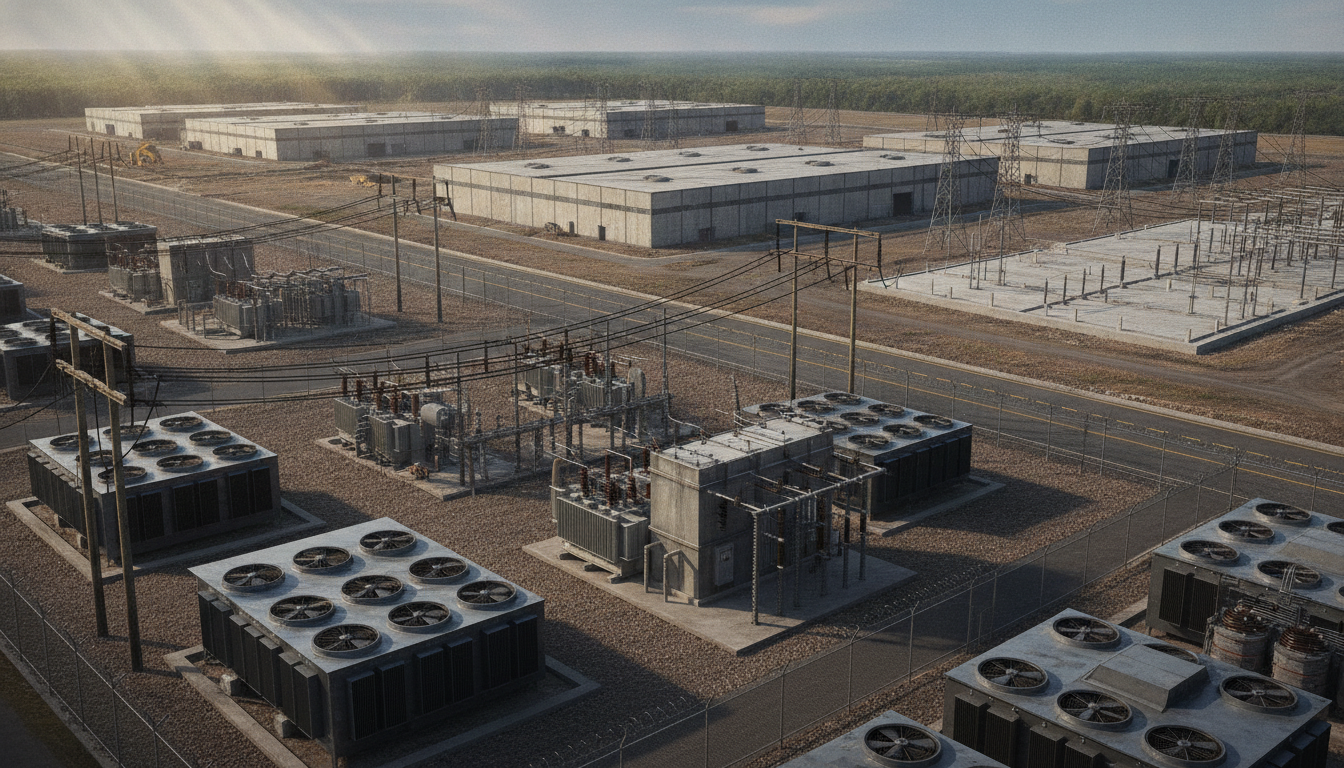
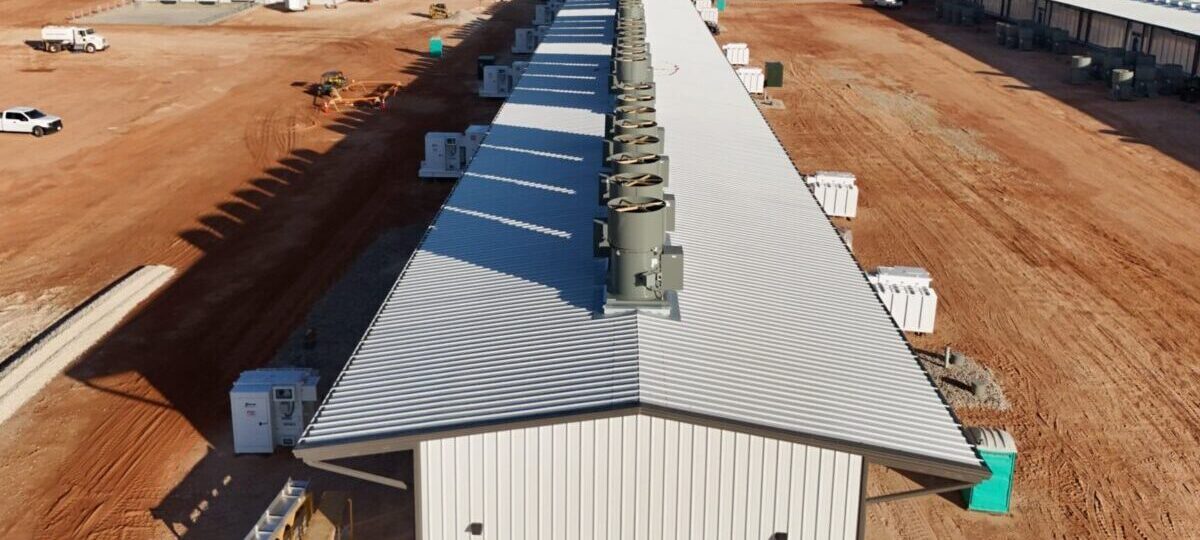
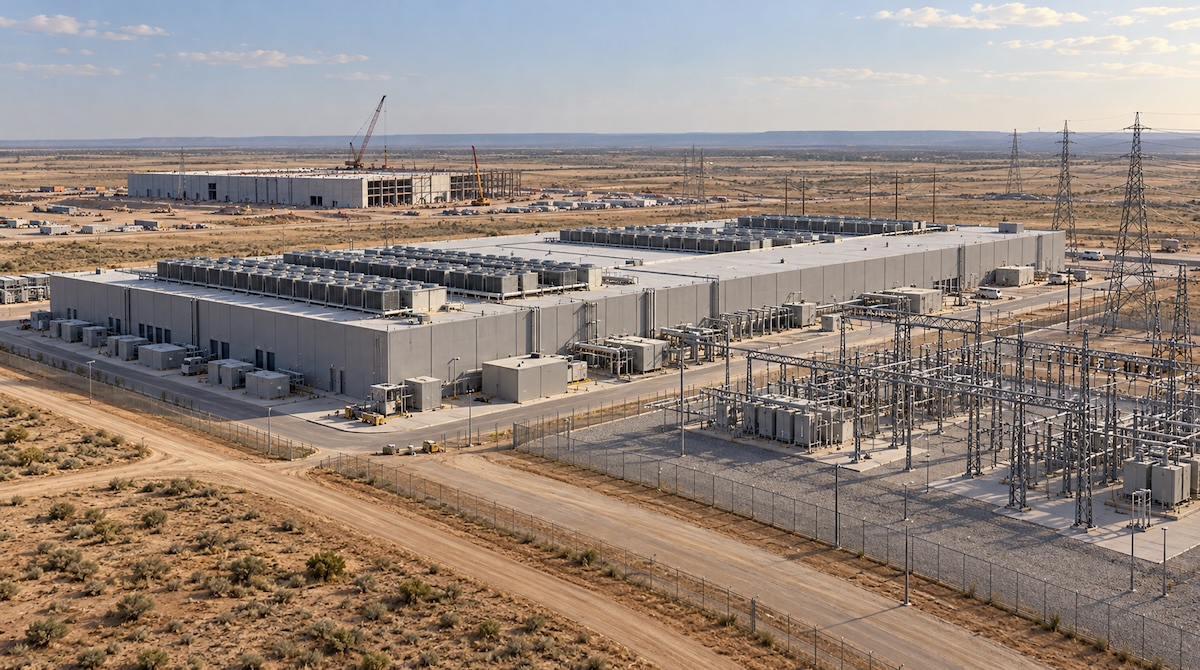
Meanwhile, Ionic reported approximately $630 million in combined cash and bitcoin holdings, with no outstanding borrowings, as it pursues customers for nearly 500 megawatts of additional power capacity across its Texas properties.
The company also reaffirmed its full-year financial guidance and said it expects a provisional regulatory classification covering 466 MW of additional demand at its Ward County campus to be finalized in December.
Leasing Revenue Drives Growth as Bitcoin Mining Shrinks
Ionic reported third-quarter gross profit of $39.3 million, compared with a $6.7 million gross loss a year earlier.
Adjusted EBITDA reached approximately $35 million, compared with just $154,000 in the third quarter of 2025, reflecting the company's shift toward higher-margin infrastructure leasing.
The improvement coincided with a sharp contraction in its legacy mining business.
Cryptocurrency mining revenue declined to approximately $5.1 million from $37.1 million a year earlier, an 86% decrease, as Ionic redirected its infrastructure toward hosting AI and high-performance computing workloads.
The company reported net income of $17.4 million, compared with a $4.5 million loss in the prior-year period.
However, that result included two substantial non-cash valuation adjustments: a $73.2 million gain from changes in the fair value of cryptocurrency holdings and a $65.9 million expense from an increase in the fair value of outstanding warrant liabilities.
Those items complicate comparisons of reported net income with the underlying operating performance of the data center business.
Ionic's adjusted EBITDA excludes these valuation effects, but the non-GAAP measure also does not account for capital expenditures or the timing differences between recognized lease revenue and cash receipts.
$44 Million in Leasing Revenue, but Only $7 Million in Cash Rent
The gap between leasing revenue and cash collections remains a particularly important aspect of Ionic's financial transition.
Chief Financial Officer Chris Hickman said the company generated approximately $44 million of digital infrastructure leasing revenue during the quarter, compared with approximately $7 million in cash rent.
Ionic's September 30 balance sheet also reported $85.2 million in deferred rent receivables, reflecting revenue recognized ahead of corresponding cash collections.
The revenue is tied primarily to Ionic's long-term lease with AI infrastructure provider Nscale at its Ward County campus in West Texas.
Ionic originally agreed to lease 234 MW of existing capacity to Nscale under a contract expected to generate approximately $1.9 billion in revenue over its initial term.
A subsequent amendment added another 89 MW of contracted capacity, subject to availability, potentially increasing the agreement's total value to approximately $2.6 billion.
The contract supports AI infrastructure development associated with Microsoft's computing requirements, while NVIDIA guarantees rent payments during the first five lease years, subject to a maximum guarantee of approximately $860 million.
As TheEnergyMag previously reported, the arrangement marked a major step in Ionic's transformation from a bitcoin mining operator into a data center landlord.
Unlike GPU cloud providers that purchase and operate computing equipment, Ionic's core strategy centers on leasing powered infrastructure to customers responsible for deploying and operating their own computing systems.
That model can provide long-term contracted revenue with a different capital expenditure profile, but the timing of cash receipts remains critical for funding infrastructure expansion.
Nearly 500 MW Available for New Customers
Beyond its existing Nscale lease, Ionic is marketing approximately 499 MW of additional gross power capacity across its Ward County and Midland properties.
The available pipeline comprises three components:
377 MW at Ward County: Part of the site's 466 MW expansion request, with energization targeted for late 2027, subject to regulatory approval and utility infrastructure completion.
112 MW at Midland: Existing energized capacity that Ionic intends to repurpose for AI and high-performance computing workloads.
10 MW at Midland: Additional capacity expected to be energized in 2027.
The 499 MW figure excludes 89 MW of future Ward County capacity already committed to Nscale.
It also represents gross electrical capacity rather than critical IT load, the portion of power directly available to computing equipment after accounting for cooling and supporting infrastructure.
The distinction matters because existing electrical access does not necessarily mean a site is immediately ready to host AI computing equipment. Facilities may still require substantial investment in cooling, electrical distribution and other infrastructure.
Ionic said it is evaluating both powered-shell and turnkey data center leasing structures while prioritizing customers with strong credit profiles.
Chief Executive Officer Andy Stewart said the company's focus remains on monetizing its remaining capacity at Ward County and Midland as data center operators place greater value on reliable access to electricity.
The company has not announced definitive customer agreements covering the remaining 499 MW.
ERCOT Classification Advances 466 MW Expansion
A major component of Ionic's development strategy depends on additional electrical capacity at Ward County.
In September, the Electric Reliability Council of Texas provisionally classified Ionic's remaining 466 MW large-load request under its Batch Zero Baseload Pathway (b) process.
The designation applies to projects treated as existing loads because they previously achieved initial energization, rather than entirely new interconnection requests.
Ionic's Ward County campus has operated with 234 MW of energized capacity since 2023. The additional 466 MW would bring the property's total gross capacity to 700 MW.
The company's original utility agreement dates to 2021, preceding the recent surge in large-load requests from AI data center developers.
As TheEnergyMag has previously examined, existing power infrastructure and established grid interconnections have become increasingly valuable as new data center developments encounter lengthy approval and transmission upgrade processes.
However, Ionic's provisional classification does not constitute final authorization to energize the additional capacity.
The company said ERCOT's verification and audit process remains ongoing, with a final classification decision expected in December.
The expansion also depends on completion of required utility infrastructure projects.
Ionic continues to target late 2027 for energization, but that schedule remains subject to regulatory and construction risks.
$630 Million Liquidity Position Supports Expansion
Ionic ended September with $381.4 million in cash and cash equivalents and 2,954 bitcoin valued at approximately $246.9 million, bringing combined liquidity to roughly $628 million.
The company reported no outstanding borrowings.
Since the end of the quarter, Ionic said it has sold approximately 25% of its bitcoin holdings for about $62 million in cash, ahead of anticipated development spending next year.
The transaction converts part of its cryptocurrency treasury into cash rather than representing an equivalent increase in total liquidity.
The company generated substantial financing proceeds earlier this year, including a $400 million private placement completed ahead of its July Nasdaq direct listing.
The balance sheet provides funding flexibility as Ionic advances substation upgrades, prepares additional sites for AI workloads and negotiates future leases.
However, its cash flow statement shows that operating activities consumed approximately $36.8 million during the first nine months of 2026.
That figure underscores the importance of distinguishing reported accounting profitability from cash generation as the company's leasing arrangements mature.
Ionic spent approximately $7 million on capital expenditures during the third quarter, primarily for equipment associated with the ongoing Ward County substation expansion.
Full-Year Guidance Reaffirmed
Ionic maintained its financial outlook for 2026, projecting total revenue of $190 million to $195 million.
The company expects digital infrastructure leasing to account for approximately $175 million of that total, with cryptocurrency mining contributing between $15 million and $20 million.
Adjusted EBITDA is forecast at $137.5 million to $142.5 million, while planned capital expenditures range from $45 million to $60 million, excluding potential acquisitions of new development sites.
The guidance suggests leasing will remain Ionic's dominant source of reported revenue through the remainder of the year.
TheEnergyMag previously reported the company's initial full-year forecast ahead of its July Nasdaq listing, when management outlined a strategy centered on monetizing powered infrastructure rather than expanding bitcoin mining operations.
That transformation is now evident in Ionic's revenue mix.
The company has moved from generating all its revenue through cryptocurrency mining a year earlier to deriving approximately 90% from infrastructure leasing.
Execution and Cash Conversion Remain Key Tests
Ionic's latest results demonstrate how quickly a bitcoin mining business can change its financial profile after securing a major AI infrastructure customer.
The company's revenue mix, gross profitability and long-term contractual commitments now resemble those of a data center infrastructure landlord more than a traditional bitcoin miner.
But several milestones remain.
The first is converting existing lease arrangements into larger recurring cash receipts as the rent schedule progresses.
The second is obtaining final ERCOT approval and completing the infrastructure required to deliver the remaining Ward County capacity.
The third is securing customers for the approximately 499 MW of additional capacity Ionic is marketing.
For investors, the company's liquidity position provides a substantial financial cushion, but future growth will ultimately depend on converting available power into operating data centers supported by long-term contracts.
The difference between powered land, contracted capacity, recognized revenue and collected cash will remain central to evaluating that transition.