Norway Pauses Data Center Grid Reservations as AI Power Demand Surges
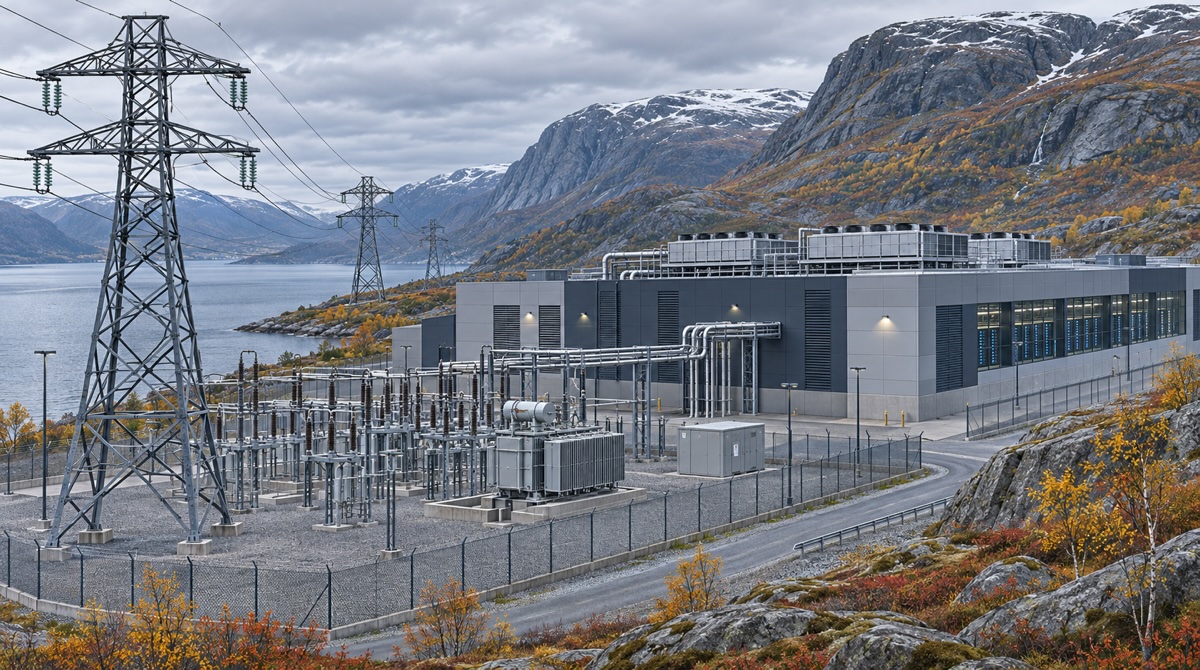
Norway has suspended new grid-capacity reservations for data centers as the government announced plans for a licensing system to exert greater control over the industry’s expansion.
The state-owned grid operator Statnett expects the temporary suspension to end no later than Aug. 1, 2027, while it develops technical requirements to protect the electricity system, according to a statement on Monday. The government’s proposed licensing regime would separately govern the establishment and operation of data centers.
The scale of demand is substantial. Data centers drawing 800 megawatts are already connected to Norway’s grid, while another 4,200 MW has been reserved and 9,100 MW is in the capacity queue. Additional connection inquiries total 18,000 MW. Norway’s maximum electricity demand is just over 25,000 MW, according to figures published by the government.
Those figures represent projects at different stages, rather than a forecast that all the requested capacity will be built.

Statnett is also pausing new technical-approval applications and pending applications for facilities connecting directly to its 420-kilovolt network. It cited rapid changes in electricity consumption and facilities’ responses to grid disturbances. Planned requirements include limits on how quickly consumption changes and rules governing disconnection during disturbances.
Existing connections remain unaffected, and facilities with the necessary technical approvals can still connect. Certain pending regional-grid applications for projects approaching commissioning will continue to be processed. Statnett also pledged to protect data centers’ queue positions. Its new requirements must undergo consultation and approval by energy regulator RME, the operator said in its announcement.
The proposed licensing system has not been enacted. The government intends it to cover existing and future facilities, with transitional arrangements, and to support digital security, emergency preparedness and necessary AI computing capacity. Cryptocurrency operations would not be considered socially beneficial.
Ministers also want large new electricity users to shoulder more network and system costs. They plan discussions with developers about contributing commercially to new generation, including offshore wind and gas-fired plants with carbon capture and storage.
Industry group Norsk Datasenterindustri warned that the measures created uncertainty for investments worth several billion kroner a month and thousands of people working on Norwegian projects, Bloomberg reported.
The intervention follows warnings that data center expansion could erode Norway’s electricity surplus. In an Oct. 29 scenario analysis, the Norwegian Water Resources and Energy Directorate, or NVE, said projects already allocated grid capacity could raise the sector’s annual consumption to about 25 terawatt-hours by 2035, from roughly 3 TWh today.
Strong demand growth combined with limited new generation could leave Norway with a power deficit and substantially higher prices, NVE said. It stressed that the scenarios illustrate possible outcomes rather than forecasts.
The new restrictions arrive as developers are already encountering difficulties delivering Norwegian projects.
Nscale’s Glomfjord facility was about six months behind schedule in October due to cooling leaks, construction setbacks and an electrical fire, with 6.4 MW operating out of a planned 30 MW, as previously reported.
An updated DatacenterDynamics report carried a differing account from a source familiar with the project. That person acknowledged the overall delay but said the December 2025 transformer fire had caused no delay, the cooling leak was resolved within weeks, and no customer fines or penalties were imposed.
Separately, NVE warned Nscale on Sept. 29 that it could face coercive fines over construction of its Kvandal data center in Narvik without an approved assessment of opportunities to reuse waste heat.
NVE ordered the company to submit the analysis by Nov. 15. The regulator said data centers exceeding 2 MW must obtain approval for such assessments before construction. The Kvandal project had been allocated 230 MW of grid capacity, with a possible 290 MW expansion, according to the regulator’s statement.
Norway had already tightened access to electricity before the latest nationwide action. On April 22, Statnett suspended new capacity reservations for large industrial consumers north of Svartisen, citing supply constraints while preserving existing reservations. That measure applied more broadly than data centers.