Duke Energy Extends Robinson Nuclear Plant to 2050 Amid AI-Driven Power Surge

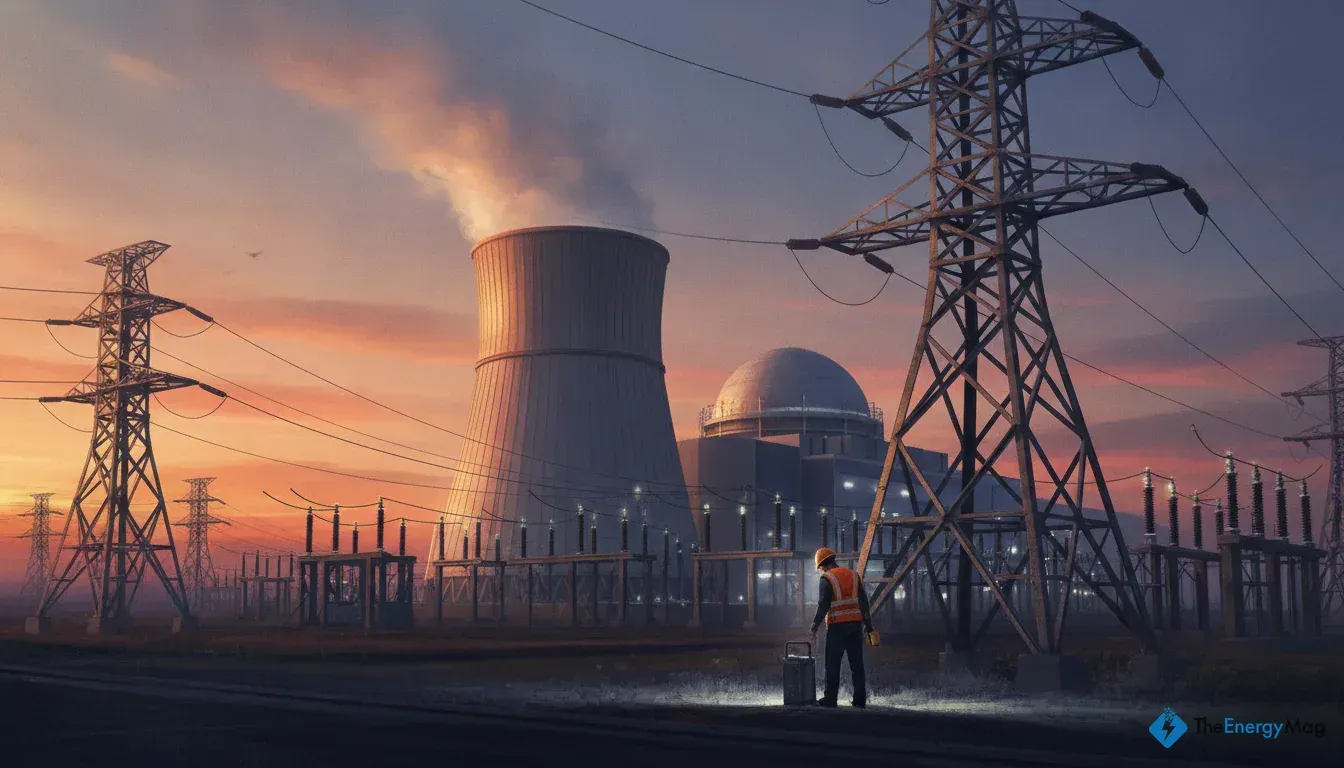
AI-generated image: synthetic visual, not an actual depiction of events, people, or locations.
Key Takeaways
- The 20-year license extension allows the Robinson Nuclear Plant to operate until 2050.
- The facility provides baseload power to approximately 570,000 homes in South Carolina.
Duke Energy (NYSE: DUK) said the U.S. Nuclear Regulatory Commission has approved a 20-year license renewal for its Robinson Nuclear Plant in South Carolina, allowing the facility to operate through 2050 and reinforcing the role of existing nuclear assets in meeting rising power demand.
The 759-megawatt plant, located in Hartsville, supplies electricity to roughly 570,000 homes and is one of the oldest commercial nuclear facilities in the Southeast. Originally licensed in 1970, Robinson had previously received a 20-year extension to 2030. The latest approval marks a “subsequent license renewal,” a process that allows reactors to operate up to 80 years, subject to federal safety reviews.
The decision comes as utilities increasingly lean on nuclear power to provide stable, around-the-clock electricity amid surging demand from data centers, electrification and industrial load growth.
Duke Energy said its nuclear fleet supplies about 51% of electricity in the Carolinas, underscoring its importance to grid reliability and long-term cost stability. The Robinson plant alone supports nearly 500 jobs and contributes about $28 million annually in local taxes, following roughly $1.7 billion in equipment upgrades over its lifetime.

The company has been actively pursuing license extensions across its fleet, with Robinson becoming the second unit to receive subsequent renewal approval after Oconee Nuclear Station in 2025. Duke plans to seek similar extensions for all 11 of its operating nuclear units.
The move aligns with a broader “nuclear renaissance” unfolding across the United States, as policymakers and private-sector players revisit atomic energy as a cornerstone of the future grid.
After years of stagnation, nuclear power has regained attention due to its ability to provide carbon-free baseload generation at scale. The shift has been accelerated by the rapid growth of artificial intelligence and high-performance computing, which are driving unprecedented electricity demand and straining existing grid infrastructure.
Major technology companies including Microsoft and Amazon have recently backed nuclear-related projects, ranging from long-term power purchase agreements to support for small modular reactor development and even efforts to restart previously shuttered plants. These commitments signal a growing willingness among hyperscalers to underwrite long-duration, capital-intensive energy assets in exchange for reliable power.
At the same time, regulators and grid operators are re-evaluating how to integrate large, continuous loads such as AI data centers, further elevating the value of existing nuclear capacity that is already connected to the grid.
Within this context, extending the life of operating reactors has emerged as one of the most cost-effective ways to preserve firm power supply. Compared with building new nuclear facilities—which face long development timelines and high capital costs—license renewals allow utilities to leverage existing infrastructure while meeting increasingly stringent safety standards.
This article was generated with the support of our AI agent, which has been rigorously trained under the supervision of well-qualified journalists. While we strive for the highest quality in every article, if you find anything amiss, please contact us to let us know.
RELATED MARKET INTELLIGENCE NEWS
MORE NEWS
NextEra Energy Reports $6.7 Billion in Q1 2026 Operating Revenues
17h ago

Applied Digital Stock Jumps 10% on $7.5B AI Hyperscaler Lease
1d ago

Cango Inc. Appoints New CFO and Director Amid Strategic Shift
2d ago

HIVE Announces Closing of Private Offering of US$115 Million of 0% Exchangeable Senior Notes
2d ago

Soluna Expands Blockware Deal With 3.3 MW at Texas Wind-Powered Bitcoin, AI Data Center
3d ago

TransAlta Appoints Mike Politeski as CFO and Grant Arnold as CCO
4d ago