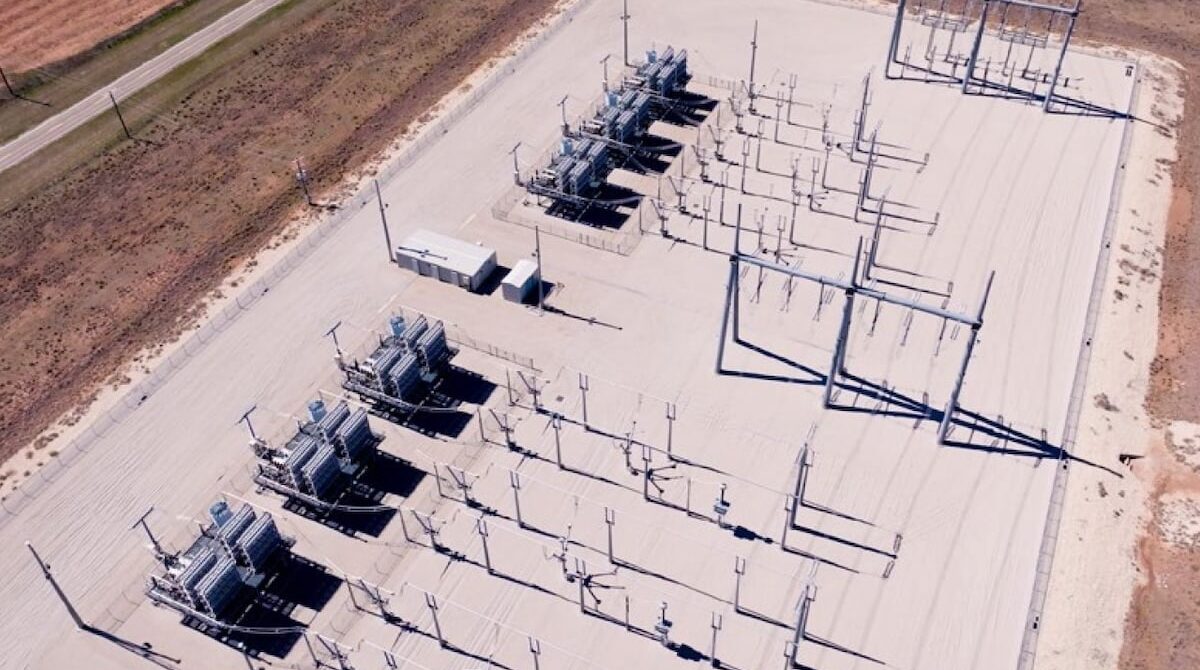
The result is an awkward transition for northern Sweden. The region attracted data centers with hydropower, cool temperatures and, until 2023, reduced electricity taxes. The same industrial sites are now being marketed for AI, yet their earlier mining activity continues to generate assessments, appeals and—in Northern Data’s case—a criminal investigation.
Where VAT turns on the workload
Swedish Tax Agency guidance says crypto mining does not constitute a service supplied for payment because there is no identifiable counterparty to proof-of-work blockchain reward. The agency applies similar reasoning to transaction-verification fees when the payer and verifier cannot identify one another. Such activity therefore falls outside the scope of VAT.
That classification matters well beyond the treatment of crypto mining revenue. A business may generally deduct input VAT on purchases used to make taxable supplies. If servers, electrical equipment and operating services are instead used for activity outside the VAT system, the agency can deny those deductions or demand repayment of refunds already issued.
The disputed business models add another layer. Both HIVE and Northern Data have maintained that their Swedish entities provided infrastructure, hashrate or related computing services to third parties. In that version of events, the commercial transaction is the sale of computing capacity to an identifiable customer, for instance, a mining pool, rather than the customer-facing company mining cryptocurrencies for its own account.
Selling AI-cloud capacity may fit more readily into the conventional VAT framework because there is normally a contract, an identifiable customer and a defined computing service. That does not automatically settle the treatment of every data center, however. Authorities can still examine what the equipment actually did, which entity controlled it and whether the contractual structure matched the underlying operation.
Northern Data faces proposals and a criminal probe
Northern Data’s Swedish exposure became public in dramatic fashion in September 2025, when investigators searched company-related premises in Frankfurt and the Swedish cities of Boden and Luleå. Four people were arrested in an investigation into suspected large-scale VAT fraud estimated at more than €100 million. No criminal finding has been made against the company, and the allegations remain under investigation.
Northern Data said it was surprised by the escalation and believed authorities had misunderstood the tax treatment of its GPU cloud offering and the economic and legal structure of its legacy cryptocurrency mining operations. It said it was cooperating and believed it complied with international tax standards.
Subsequent transaction documents provided more detail. According to a prospectus prepared for Rumble Inc.’s acquisition of Northern Data, the Swedish Tax Agency audited three subsidiaries: Decentric Europe BV, Hydro66 Svenska AB and Hydro66 Services AB.
The agency issued proposed decisions asserting that certain activities at Northern Data’s Boden operations constituted cryptocurrency mining outside the VAT system. It proposed denying previously claimed input VAT of about 300 million kronor, or €28 million, at Decentric Europe and 218 million kronor, or €20 million, at Hydro66 Svenska. Those figures included potential penalties but excluded interest.
Northern Data formally disputed the Decentric proposal and said it intended to contest the Hydro66 proposal. It argued that the activities involved providing infrastructure and services to third parties and therefore constituted taxable supplies. It also said the agency may have relied on incomplete operational data and assumptions that did not reflect the commercial arrangements.
As of the prospectus, the proposed decisions had not become final assessments. Northern Data had not recognized a provision, concluding that an outflow was not probable, but disclosed the matters as contingent liabilities.
Tether, Northern Data’s controlling shareholder before the Rumble transaction, committed as much as $200 million to fund certain tax liabilities if they became payable or had to be accrued. That support can provide liquidity, but transaction documents cautioned that it does not eliminate the underlying economic cost.
HIVE records the liability Northern Data has not
HIVE’s dispute has progressed further through Sweden’s administrative courts.
Its Bikupa Datacenter AB and Bikupa Datacenter 2 AB subsidiaries received a series of decisions beginning in December 2022 that rejected input-VAT recovery and required repayment of earlier refunds, together with supplements and interest. HIVE appealed, arguing that the decisions did not reflect Swedish law or the technical nature of its hashrate-services business.
The Administrative Court and Court of Appeal ruled against the company. HIVE applied on July 20, 2026, for permission to appeal to the Supreme Administrative Court, although its Swedish counsel advised that the prospect of a favorable outcome was remote.
Those judgments prompted HIVE to recognize an 822 million-kronor, or $84.7 million, provision for all disputed periods through June 2026. The non-cash charge includes $76.6 million of VAT, $1.5 million of tax supplements and $6.6 million of interest. The exposure may increase because interest continues to accrue.
The charge exceeded HIVE’s $79.1 million in quarterly revenue and contributed to a $142.9 million net loss. The company had $208 million in cash at the end of June, meaning the provision is material even though no equivalent cash payment occurred during the quarter.
HIVE continues to dispute the assessments. It has said its position is supported by EU guidance, an advance ruling, a forensic technology opinion and a legal opinion from a Swedish VAT professor.
HIVE is also taking the dispute beyond Sweden’s ordinary tax-appeal process. In an Aug. 11 regulatory filing explaining the delayed submission of its quarterly report, the company said it had initiated proceedings with the European Commission over what it called the systemic refusal of Swedish administrative courts to refer unsettled questions of EU law to the Court of Justice of the European Union.
HIVE also said it was preparing a civil action against a Swedish government agency seeking damages arising from the tax authority’s handling of the disputed VAT matters. The company did not say that the civil complaint had been filed, identify the intended court or quantify the damages it would seek.
HIVE explicitly tied its Swedish operational shift to tax enforcement. In March, the company said security requirements on disputed assessments and uncertainty over input VAT had made its traditional hashrate-production model potentially uneconomic in Sweden.
It began phasing down ASIC-based computing at its larger Boden facility while converting a separate 7-megawatt site to Tier III standards for AI and high-performance computing. HIVE is also planning a similar conversion of its 32-megawatt Big Boden site and has signed a nonbinding colocation letter of intent covering as much as 25 megawatts.
The move is part of a wider HIVE expansion into GPU cloud infrastructure, not simply a tax response. Yet the company’s disclosures make clear that Sweden’s treatment of mining helped determine which workloads it would continue operating there.
Sweden’s broader tax reset
VAT enforcement is not the only policy change affecting the economics of Swedish data centers.
Sweden abolished a reduced electricity-tax rate for data centers from July 1, 2023, after the government concluded that the incentive was no longer appropriate. The government said electricity might need to be directed toward sectors employing more people and that removing the reduction could encourage greater data-center efficiency.
The change applied to data centers generally, not just cryptocurrency miners. HIVE said it added about 0.30 kronor per kilowatt-hour to the cost of electricity at its Swedish facilities.
A different Swedish rule is now being challenged in Luxembourg. In Case C-577/25, the European Commission alleges that Sweden breached EU and European Economic Area rules by requiring clients to withhold preliminary income tax equal to 30% of gross payments to certain foreign contractors without Swedish F-tax approval or a permanent establishment in the country.
The Commission argues that these contractors may have no Swedish income-tax liability and can nevertheless wait as long as two years for refunds, creating a barrier to cross-border services. Sweden submitted its defense in November 2025, and the case remains pending.
That litigation may not be a legal precedent for either HIVE or Northern Data. It concerns preliminary income-tax withholding rather than VAT deductions, and it applies according to cross-border tax status rather than company size or computing workload.
Its relevance is broader, however. In both settings, authorities use withholding, denied refunds, repayment demands or security requirements to protect tax collection while the underlying liability is contested. Those mechanisms can impose financing and administrative costs long before courts reach a final answer.