DeepSeek Plans 1-Gigawatt AI Data Center in Inner Mongolia
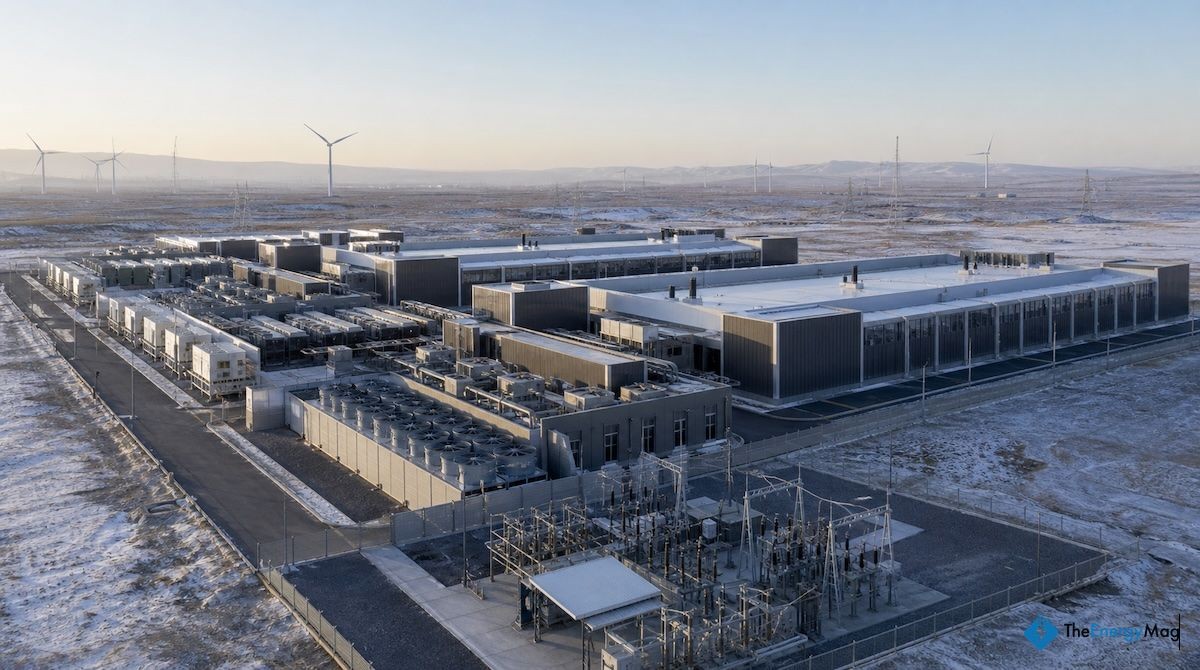
AI-generated image: synthetic visual, not an actual depiction of events, people, or locations.
DeepSeek is developing a one-gigawatt AI data center in northern China, a project that would give the startup substantially more computing infrastructure as it seeks to compete with better-funded US rivals.
The campus is planned for Ulanqab in China’s Inner Mongolia region, about 350 kilometers (217 miles) from Beijing, Bloomberg News reported, citing people familiar with the project. Part of the facility is expected to begin operating by the end of 2027, according to the report. DeepSeek hasn’t publicly announced the project, and details including its cost, chip suppliers and construction schedule remain unclear.
A one-gigawatt power allocation would place the facility among the largest AI computing developments planned by a Chinese model developer. It would also mark an expansion beyond the relatively lean infrastructure strategy that helped DeepSeek attract global attention after its R1 reasoning model demonstrated competitive performance at a fraction of the reported development cost of some US systems.
The project follows earlier indications that DeepSeek was establishing its own infrastructure in Ulanqab. The company advertised positions in April for a data-center engineer and a delivery manager based in the city. The jobs included responsibility for maintaining AI server clusters, overseeing construction and bringing new facilities online.

Ulanqab has become a favored location for large computing projects because of its cool climate, available land and access to wind and solar power. The city’s average annual temperature is about 4.3 degrees Celsius, allowing operators to use outside air for cooling during much of the year and reduce one of a data center’s largest sources of electricity consumption.
The location also fits China’s “East Data, West Computing” strategy, under which energy-intensive computing is being shifted from densely populated coastal regions to areas with cheaper land and greater power resources. China’s National Development and Reform Commission has designated Inner Mongolia as a national computing hub and called for data centers there to achieve power-usage-effectiveness ratios below 1.2 while increasing their use of renewable energy. The regional hub is intended to support computing demand in Beijing, Tianjin and other eastern markets, according to the commission’s approval.
DeepSeek’s infrastructure expansion comes as access to advanced processors remains a central constraint for Chinese AI companies. Its V3 model was trained on a cluster of 2,048 Nvidia H800 processors, according to the company’s technical report. Washington subsequently tightened controls on shipments of advanced Nvidia chips to China.
The startup is developing an inference processor of its own, although that effort remains at an early stage, Reuters reported in July. DeepSeek has also worked with Huawei Technologies Co. as Chinese developers seek to reduce their reliance on US hardware.
Building a gigawatt-scale campus would require DeepSeek to secure large volumes of processors, networking equipment and electricity, potentially testing the availability and efficiency of China’s domestic AI-chip supply. The facility’s ultimate computing performance will depend not only on its power capacity but also on the processors installed and how effectively they can be linked into large training clusters.
The proposed investment follows a sharp expansion of DeepSeek’s financial resources. The company completed its first outside funding round in June, raising more than $7 billion at a valuation exceeding $50 billion. It has since begun preparing for a potential mainland Chinese initial public offering and could submit an application this year for a 2027 debut, Bloomberg reported.
That capital would give DeepSeek greater scope to own the computing infrastructure underpinning its models rather than relying primarily on leased capacity. It also underscores how the contest among Chinese AI developers is increasingly shifting from model design toward control of chips, electricity and data-center capacity.
This article was generated with the support of our AI agent, which has been rigorously trained under the supervision of well-qualified journalists. While we strive for the highest quality in every article, if you find anything amiss, please contact us to let us know.