
Dynamix-Led Fund Deploys $95M for Texas AI Data Center Grid Deposits
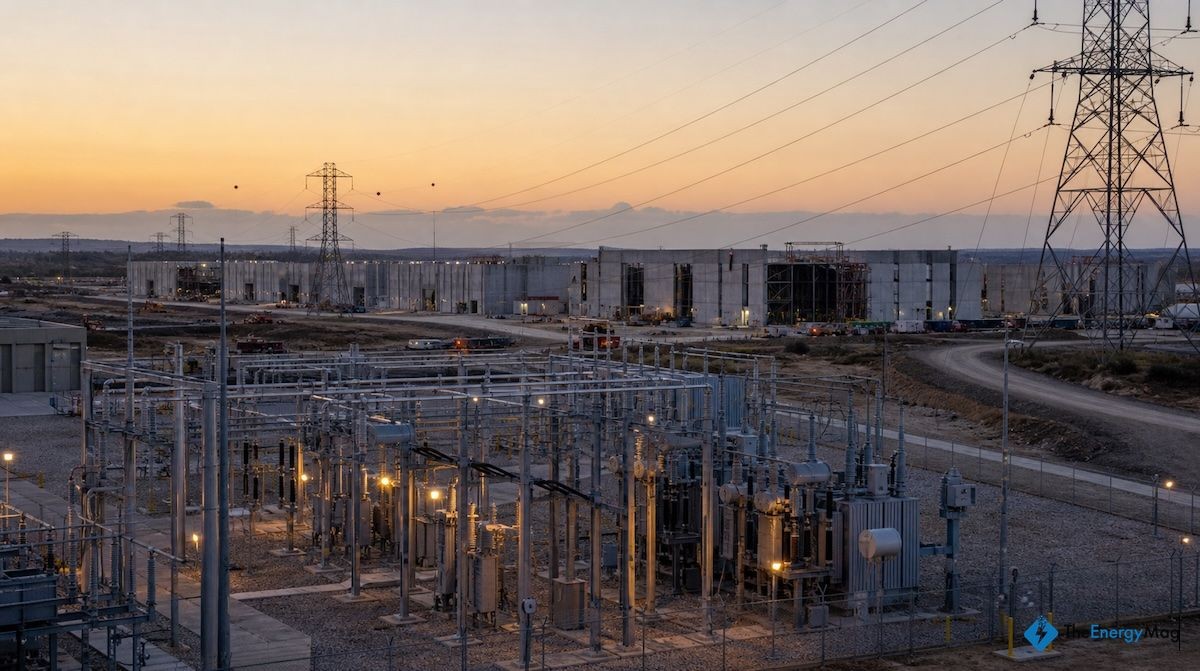
AI-generated image: synthetic visual, not an actual depiction of events, people, or locations.
Dynamix Capital and partners Staubach Capital and Soda Springs closed a $95 million fund to finance grid-interconnection security deposits for two planned AI data center sites in Texas.
The SSSC Batch Zero Fund LP backed applications covering about 1.7 gigawatts of requested capacity, including a 1.2-gigawatt site near Austin and a 480-megawatt site near the Dallas-Fort Worth metropolitan area, the firms said in a statement Thursday.
The financing allowed the landowners behind the projects to meet financial-commitment requirements for the Electric Reliability Council of Texas’ Batch Zero process. ERCOT is assessing large electricity users collectively under the process, replacing a project-by-project system that had become strained by the volume of data-center connection requests.
The requested capacity represents prospective grid access rather than committed electricity supply. ERCOT’s studies could result in projects receiving less power than requested or being required to fund additional transmission improvements.

The firms didn’t identify the landowners, the precise locations of the developments or the utilities serving them. They also didn’t disclose the fund’s pricing, maturity, collateral terms or the institutional credit partner described as its anchor investor.
Dynamix Capital Partners, founded in 2021 by Andrejka Bernatova and Nader Daylami, is the private-investment arm of a broader platform focused on energy, power and digital infrastructure. Its strategy includes investments in grid infrastructure, natural-gas supply chains and businesses serving data centers. Bernatova and Daylami also manage separate publicly traded acquisition vehicles under the Dynamix name, but the Batch Zero fund is a private-market transaction.
Together, the partners cover three components of the transaction: Dynamix structured and raised the capital, Staubach contributed real-estate underwriting and development expertise, and Soda Springs brought experience advancing large power and data-center sites through ERCOT.
The undisclosed terms still make it difficult to assess the fund’s potential returns or the risks it would bear if a project is delayed, receives a reduced allocation or fails to proceed.
Security requirements were a central qualifying condition for Batch Zero. Under ERCOT’s planning guide, a project generally must provide security equal to the estimated cost of transmission improvements needed specifically for the development. When such upgrades are identified but their cost has not been estimated, the requirement defaults to $50,000 per megawatt. No security is required when the study indicates that project-specific transmission improvements aren’t needed.
Texas regulators approved Batch Zero in June as a transitional framework for projects of at least 75 megawatts that meet specified development and financial thresholds. ERCOT called it the first batch process established by a US independent system operator for large electricity users.
ERCOT said in June that it was tracking more than 438 gigawatts of large-load requests, with data centers accounting for almost 89% of the total. That pipeline is more than five times ERCOT’s record systemwide peak demand, illustrating both the scale of developer interest and the need to screen projects for readiness.
ERCOT expects to classify Batch Zero applicants in August. Its current planning guide requires the grid operator to deliver the Batch Zero interconnection study, including preliminary megawatt allocations, to participating utilities by April 9, 2027. A subsequent refinement process will determine the transmission projects needed to support committed loads.
The Public Utility Commission of Texas is also considering proposed Rule 25.194, which would establish broader interconnection standards for large loads. Dynamix said adoption is anticipated in September and that the consortium intends to pursue similar financing opportunities in future ERCOT application batches.


